
Heavy Defects
Deep scratches, oxidation, sanding marksUse Pro Wool Pad or Basic Heavy Cutting Pad for maximum paint correction.
Go to heavy correction pads ↓Professional foam and wool polishing pads for car detailing — paint correction, scratch removal, one-step polishing and final finishing. Choose the right buffing pad by correction stage, defect level and machine type. Read the complete polishing pad guide to find the right pad for every paint condition.
Choose Your Pad ↓A polishing pad controls how much correction power reaches the paint, how much heat is created and how clean the final finish looks. Before choosing a foam or wool polishing pad, check the defect level, panel size and whether you are cutting, refining or finishing. For a full breakdown of every pad type by paint condition, see the complete guide to polishing pads.
Use a wool polishing pad or heavy cut foam for oxidation, deep scratches and heavy swirl marks. Use a medium cut foam pad for regular paint correction. Use a soft finishing pad when the goal is gloss, clarity and a swirl-free finish on clear coat.
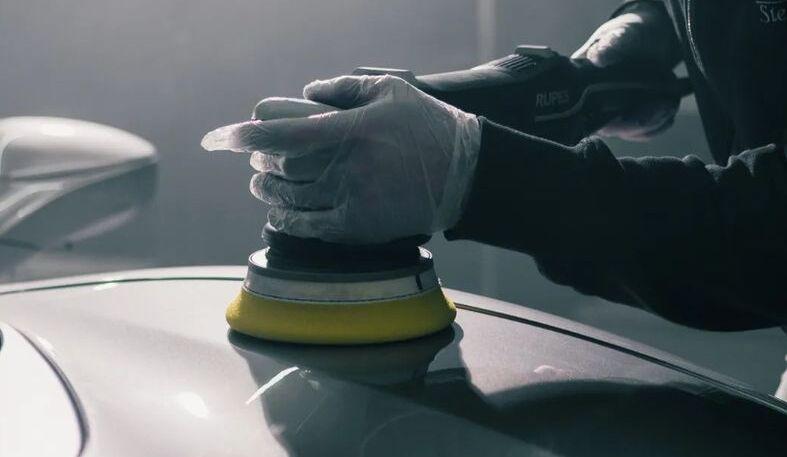
Choose your polishing pad by paint condition, correction stage and machine size. Use wool or heavy cut pads for stronger defect removal, one step pads for balanced correction, and finishing pads for final gloss.
Use Pro Wool Pad or Basic Heavy Cutting Pad for maximum paint correction.
Go to heavy correction pads ↓Use Basic Cutting Pad for controlled correction on car paint and regular detailing polishing work.
Go to cut pad ↓Use Basic One Step Pad when you need a balanced polishing pad for daily detailing work.
Go to one step pad ↓Use Basic Finishing Pad for soft finishing, gloss enhancement and final paint refinement.
Go to finish pad ↓Best for bumpers, pillars, mirrors, tight curves and spot correction where control matters more than speed.
Go to size guide ↓Best for doors, hood, roof and fast correction on larger paint sections with a DA or rotary polisher.
Go to size guide ↓Start here when the paint has heavy oxidation, deep scratches, severe swirl marks or neglected clear coat. The Pro Wool is a natural wool polishing pad for maximum cut with better control. The Heavy Cut pad is an aggressive foam cutting pad for demanding paint correction where a standard cut pad is not enough.

Natural wool polishing pad for fast defect removal with better control and reduced vibration. The go-to wool buffing pad for deep scratches, oxidation and neglected paint — compatible with DA and rotary polishers.
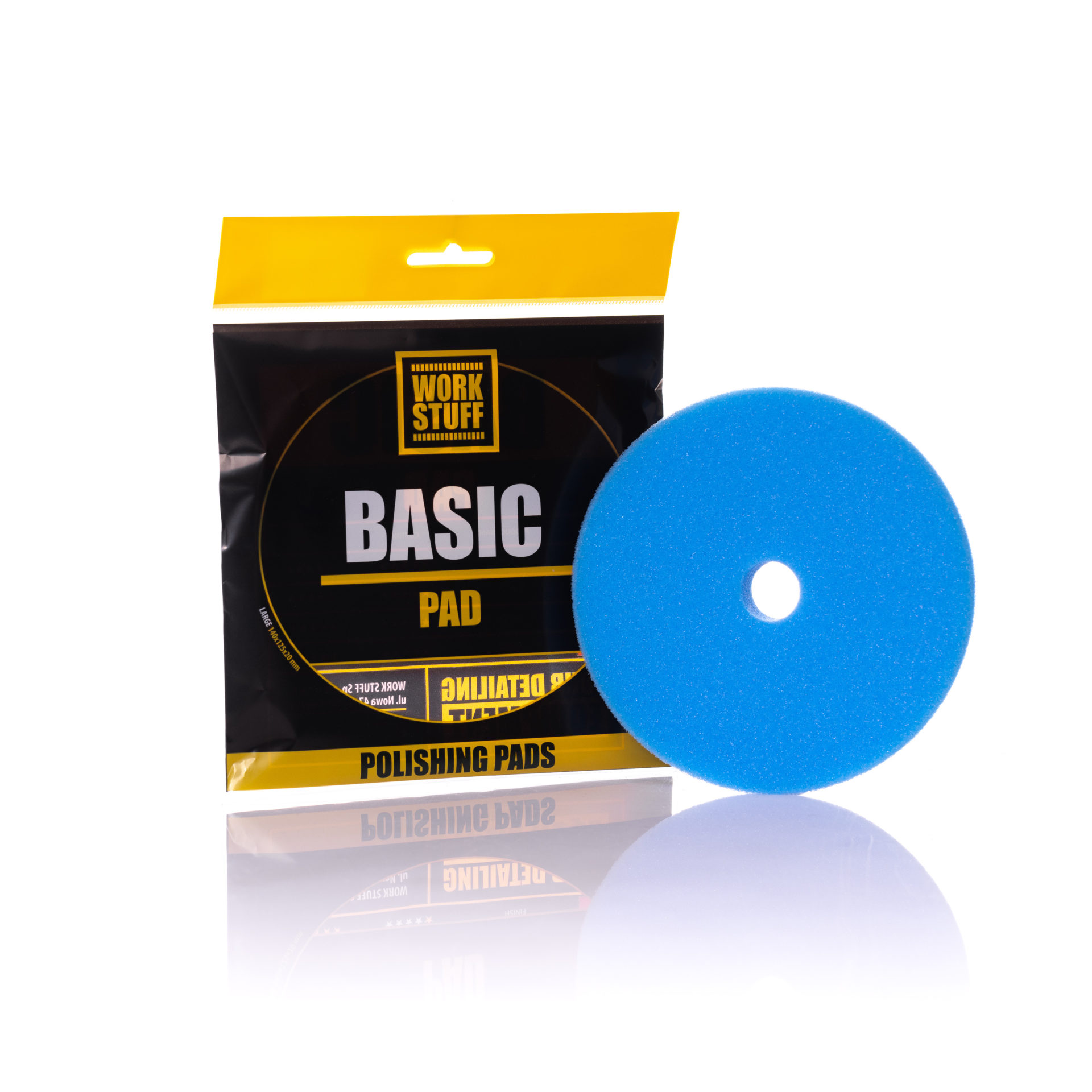
Heavy cut polishing pad in closed-cell foam for oxidation, deeper scratches and severe paint defects where a standard cutting foam pad is not enough. The right heavy cutting pad when paint correction demands more aggressive removal.
The Basic Pad foam range covers the most common car detailing pad workflow: cut defects with the cut pad, refine with the finishing pad, or choose the one step polishing pad when you need correction and gloss in one process. All foam pads are available in 80/90 mm and 125/140 mm sizes for DA and rotary polishers.
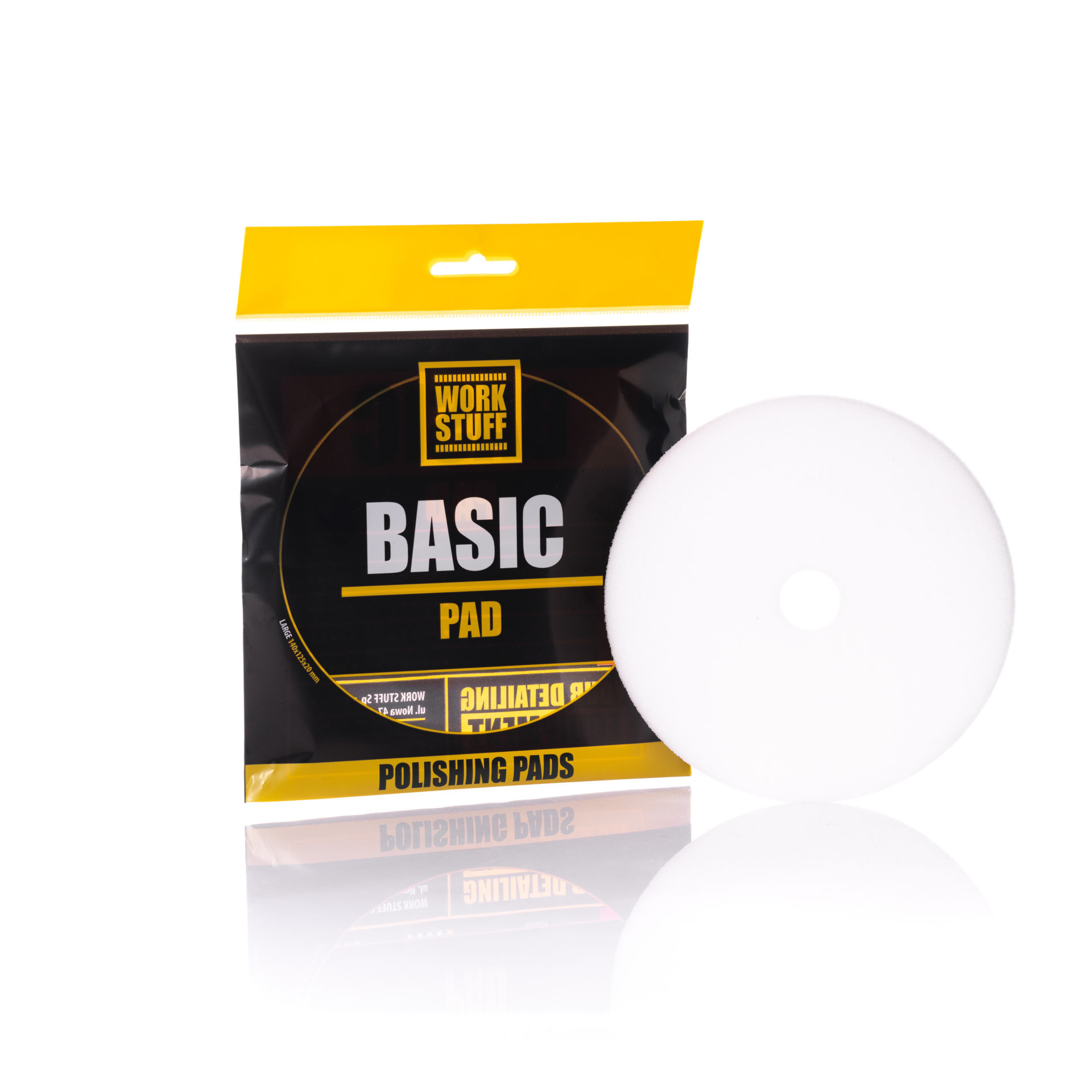
Medium foam cut pad for regular paint correction, swirl mark removal and restoring clarity on automotive clear coat. The right car detailing pad for moderate defects before a finishing stage.
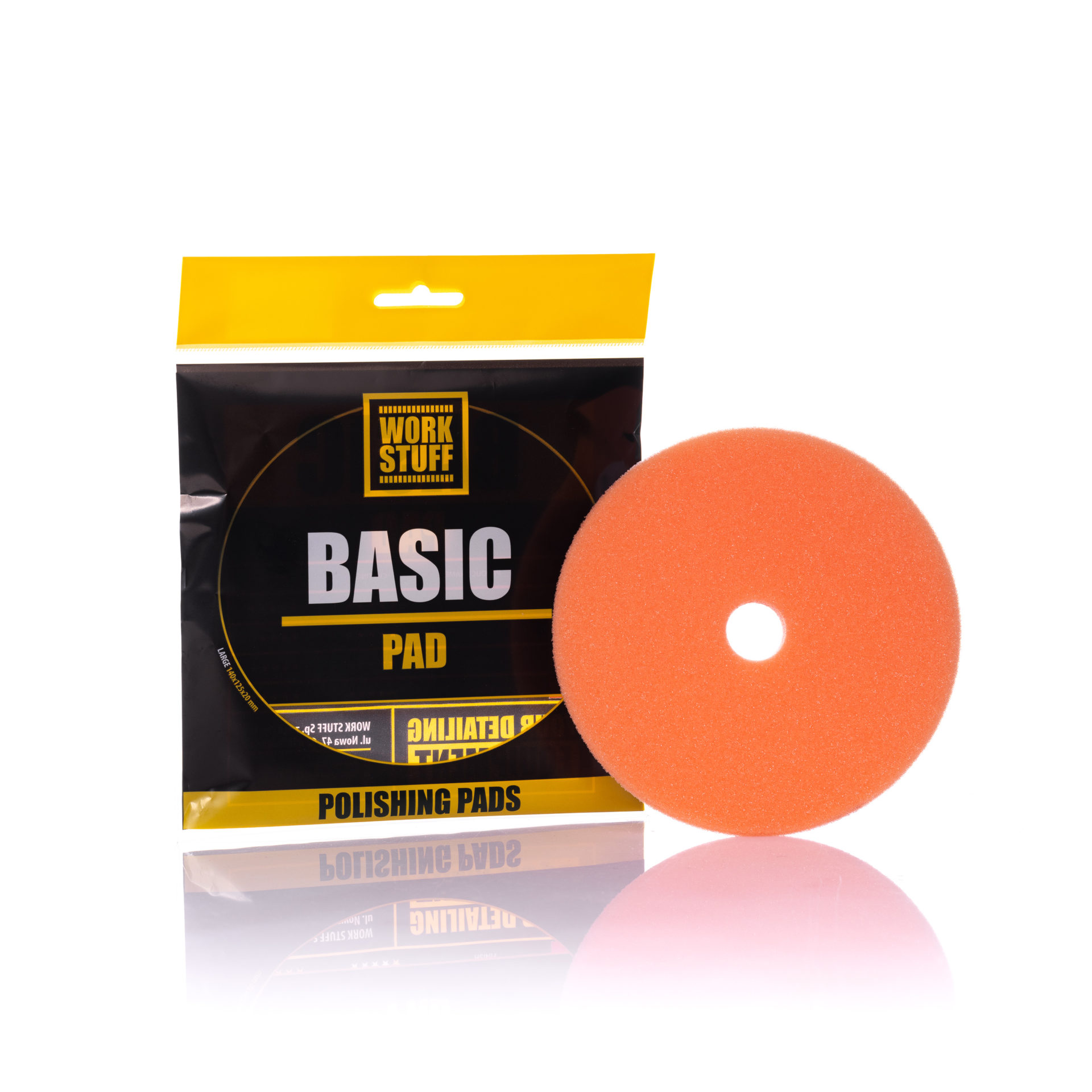
One step polishing pad for faster correction when you need a cleaner finish without running multiple pad stages. Useful for maintenance polishing, used car prep and commercial detailing work.
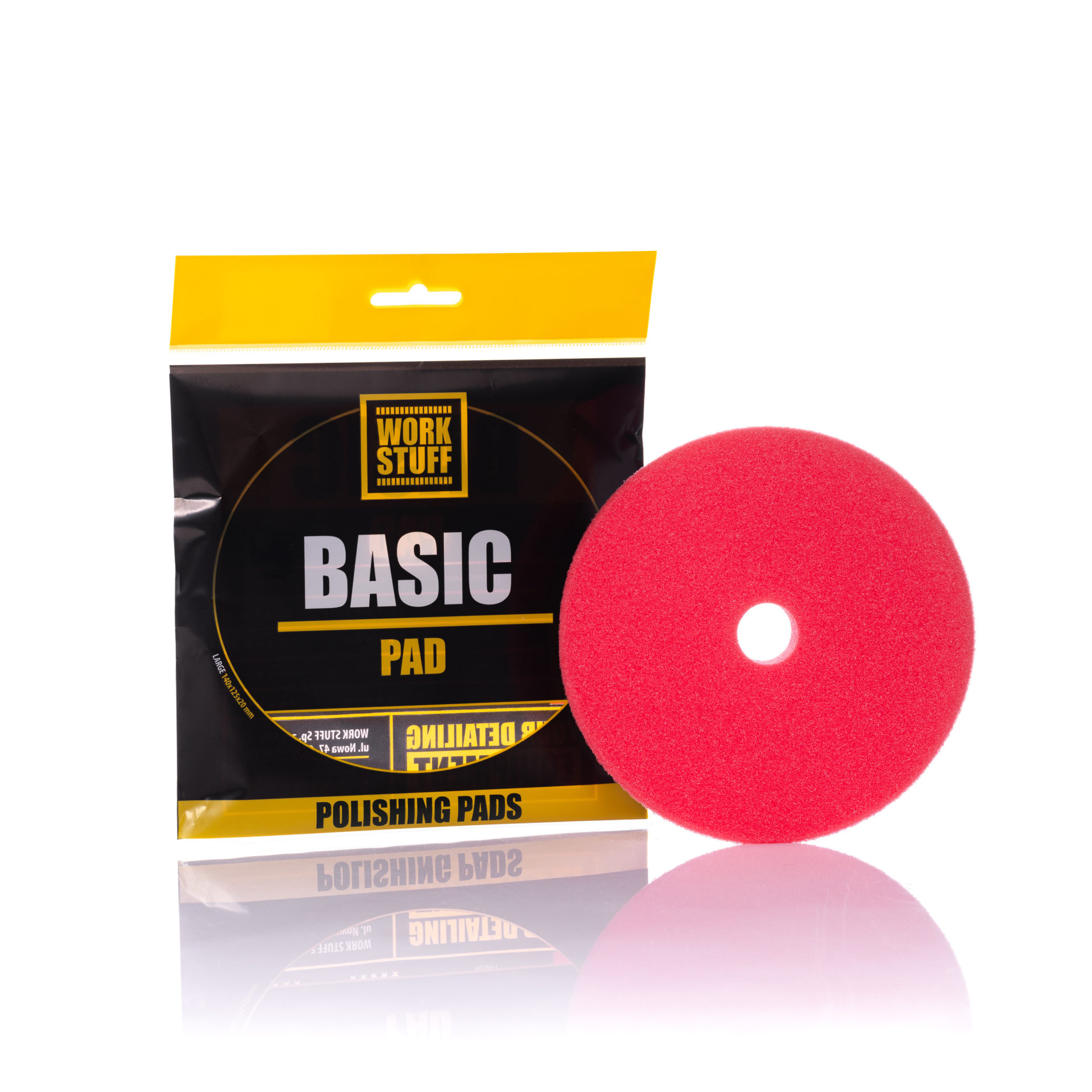
Soft finishing pad for final polishing, haze removal, micro-marring correction and high-gloss paint refinement. The last step after a cut pad or one step pad stage — use this finishing pad to maximize clarity and surface gloss.
Use larger buffing pads for broad panels and smaller pads for controlled correction around edges, bumpers, pillars, mirrors and tighter areas. Size affects pressure transfer, coverage speed and the risk of burning edges on smaller paint sections.
Best for doors, bonnet, roof and large painted panels. Faster coverage and more efficient correction on open surfaces with a DA or rotary polisher. Approx. 5 / 5.5 in pad face.
Best for bumpers, pillars, curved areas, motorcycles and tight body lines. More control with less risk around edges. Good size for a wool polishing pad on tighter correction work. Approx. 3 / 3.5 in pad face.
Basic Pad foam models use a 20 mm profile, giving a stable balance between control, pressure transfer and machine feedback during polishing. Works across cut, one step and finishing pad grades.
Practical answers for choosing foam and wool polishing pads for car detailing, paint correction and final finishing. For a full pad-by-paint-condition breakdown, see the complete guide to polishing pads.
Start with the least aggressive pad that can correct the defect. For heavy oxidation or deep scratches, use the Pro Wool polishing pad or Heavy Cut pad. For moderate swirls, start with the Cut pad. Follow correction with a finishing pad to remove haze and restore gloss.
A wool polishing pad is used for heavy paint correction — deep scratches, oxidation, sanding marks and severe swirl marks where foam pads cannot remove the defect in a reasonable number of passes. After a wool pad correction stage, refine the paint with a medium or soft foam pad to remove any haze left by the wool.
A cutting pad removes defects faster using a firmer foam but can leave light haze on some paints. A finishing pad is softer and is used to refine gloss, remove light micro-marring and improve clarity after the correction stage. Most correction workflows run a cut pad first, then a finishing pad for the final result.
Work Stuff polishing pads are selected by correction level, not only by color. For heavy defects use Pro Wool or Heavy Cutting Pad, for medium correction use Cutting Pad, for one-step polishing use One Step Pad, and for final gloss use Finishing Pad. See the full polishing pad guide for a complete pad-by-defect breakdown.
A one step polishing pad combines correction and finishing in a single pass. It is useful when you want better gloss and defect reduction without running a full multi-stage correction — ideal for maintenance polishing, used car prep and when time is the constraint. For deeper defects, a dedicated cut pad and finishing pad will give a better result.
Choose 125/140 mm for larger panels and faster coverage — doors, bonnet and roof. Choose 80/90 mm for bumpers, mirrors, pillars, tight curves and smaller working areas where control matters more than speed. The 80 mm size also works well as a wool pad for DA polisher applications in tighter sections.
Use a wool buffing pad when the defect level is too severe for foam — heavy oxidation, wet sanding marks, neglected clear coat or repeated passes with a heavy cut foam that still leave the defect visible. After wool, switch to a foam cut or finishing pad to refine the surface and restore gloss. The polishing pads guide has a full defect-to-pad decision chart.
Yes. Work Stuff polishing pads are designed for machine polishing and can be used with dual-action (DA) and rotary polishers when the backing plate size matches the pad. The Pro Wool is a wool pad for DA polisher use as well as rotary — both give excellent results when the machine speed and product are matched to the pad grade and paint condition.


