

Choose the towel by the job — not just by GSM.
The right microfiber towel for detailing depends on what you are actually doing: final buffing on paint, cleaning an interior, wiping glass, removing product residue or handling high-volume workshop work.
This guide helps you choose the right microfiber by task first, then use GSM, weave and pile to refine the choice.
For paint finishing, choose a plush 500–600 GSM microfiber. For interiors and everyday detailing, 320–350 GSM gives better control. For glass, use a dedicated waffle weave towel. For drying the whole car, use a dedicated drying towel rather than a small buffing microfiber.
What Microfiber Towel Should You Use for Each Detailing Job?
GSM matters, but it should not be the first question. A 600 GSM plush towel may be excellent on paint and completely unnecessary for an interior dashboard. Likewise, a waffle towel designed for glass is not the tool you want for final buffing on soft black paint.
Plush towels for wax, sealant and polish residue removal, Quick Detailer and final inspection.
Balanced GSM and easier control for plastics, trim, dashboards and regular cleaning.
Dedicated waffle structure for windows, windscreens and mirrors where lint and streaks matter.
Choose softer paint-focused microfiber for the final pass and lighter microfiber for regular maintenance.
Colour-coded towels make it easier to separate surfaces and keep clean microfiber moving through the job.
Practical format for interiors, jambs, wheels, engine bays and high-volume support work.
What GSM Microfiber Towel Should You Choose?
GSM describes fabric weight per square metre. It affects thickness, absorbency and cushioning, but a higher number does not automatically mean a better towel for every task.
500 GSM or 600 GSM Microfiber for Paint?
Both are useful for paint-focused finishing, but they serve slightly different priorities. A 500 GSM towel gives a strong balance between plushness and control, while 600 GSM adds more cushioning for delicate finishing work.
GENTLEMAN
Use GENTLEMAN 500 GSM for wax and sealant removal, polish residue, Quick Detailer and regular paint finishing.
It is the more versatile choice when you want one plush towel for several paint-focused tasks.
GENTLEMAN+
Choose GENTLEMAN+ 600 GSM when extra softness and cushioning matter most, especially on dark paint, delicate finishes and final buffing.
It is also a strong pairing with products such as GOOD STUFF Gloss Detailer .
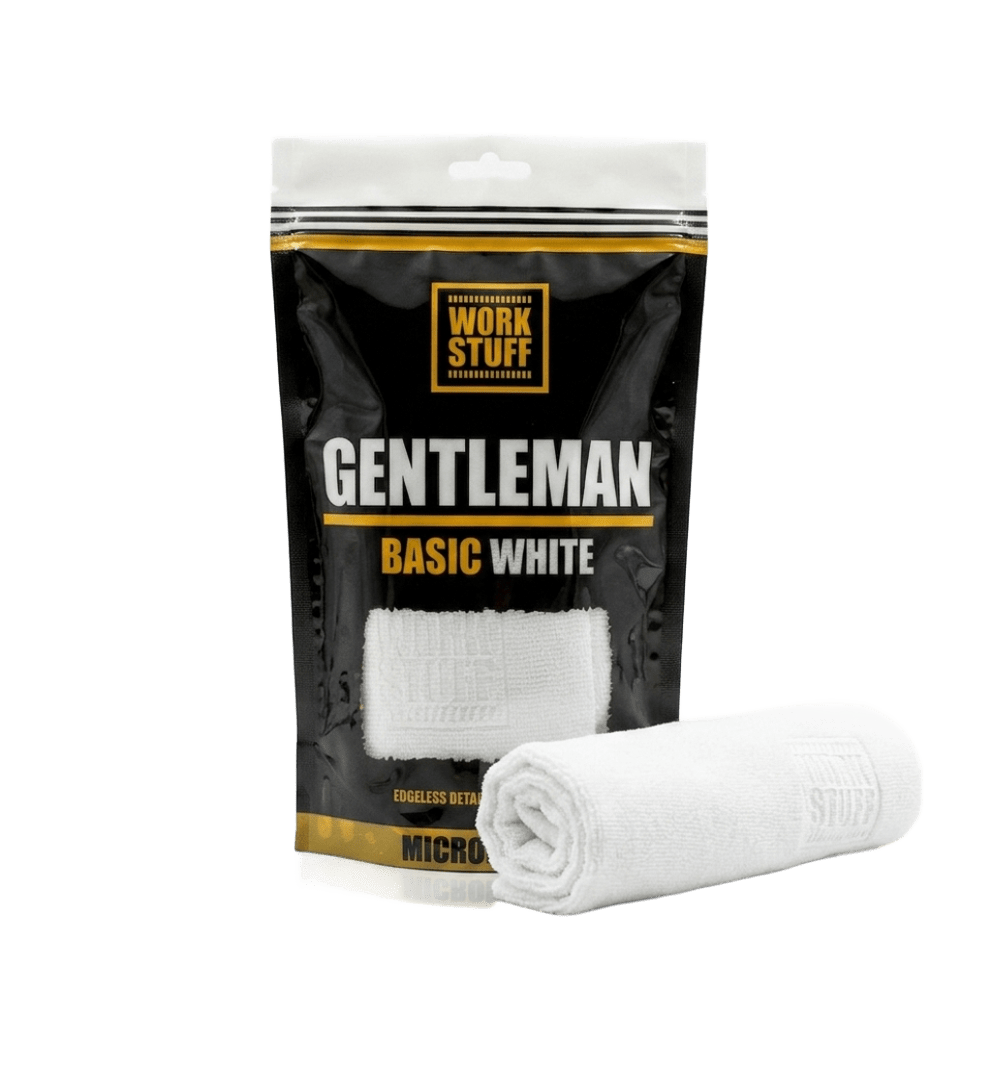
Why 350 GSM Works So Well for Everyday Detailing
A medium-density towel is easier to control than a very thick finishing microfiber when cleaning dashboards, door panels, plastics and interior trim.
GENTLEMAN Basic uses a 350 GSM dual-sided construction and a practical 40 × 40 cm format.
It is useful when you need one towel for regular maintenance without moving into a very thick paint-finishing microfiber.
What Side of a Microfiber Towel Should You Use?
If your towel has two noticeably different sides, use the pile that gives you the best control for the task rather than automatically using the same side for everything.
Delicate wiping & final passes
The softer, longer-pile side is useful when you want more cushioning on delicate surfaces or a gentler final wipe.
Cleaning & controlled removal
A shorter pile gives more direct contact and control when removing cleaner, product residue or working on less sensitive interior surfaces.
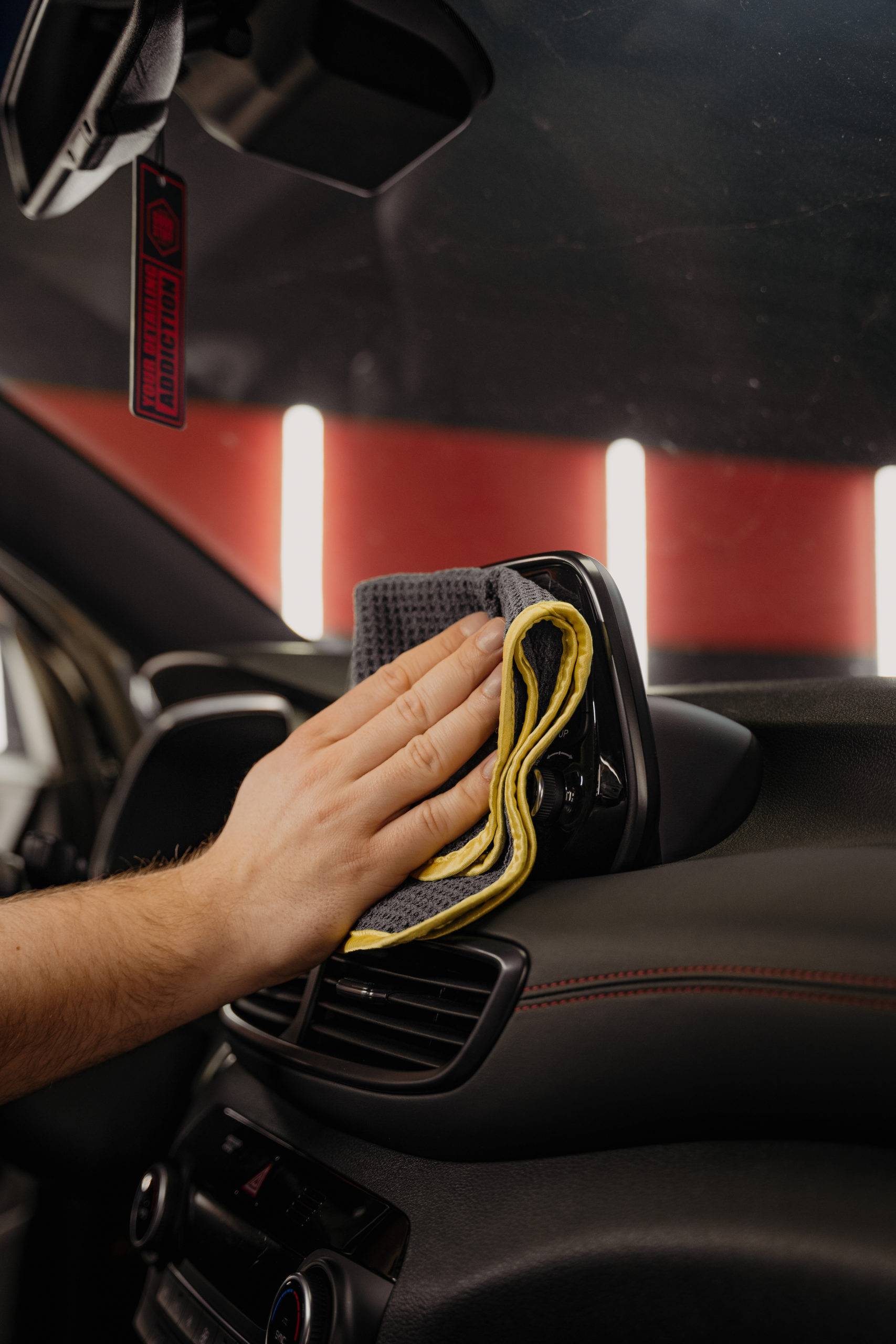
Why Is Waffle Weave Better for Car Glass?
Glass does not need maximum plushness. It needs controlled contact, low lint and efficient removal of cleaner residue.
The ZEPHYR Waffle Towel uses a 400 GSM waffle weave and a compact 35 × 35 cm format for windows, windscreens and mirrors.
Pair it with GOOD STUFF Glass Cleaner for a dedicated glass-cleaning workflow rather than using the same plush towel you use on paint.
When Do Worker and Roll Microfiber Make More Sense?
In a detailing studio, the question is not always which towel is the softest. Sometimes the priority is having enough clean towels available, separating tasks and replacing contaminated towels quickly.
WORKER
WORKER is an all-purpose microfiber towel suited to interiors, plastics, general wipe-downs and workshop tasks where towel rotation matters.
Roll Microfiber
Roll Microfiber is a practical format for high-volume interior work, jambs, wheels, engine bays and other support tasks.
For delicate final paint finishing, move back to a dedicated plush towel rather than treating the roll as one towel for every job.
Keep your cleanest, softest towels dedicated to paint and final finishing.
Assign a separate colour to dashboards, plastics and interior trim.
Keep glass towels separate from waxes, dressings and oily interior products.
Retire older towels to jambs, wheels and engine-bay support work.
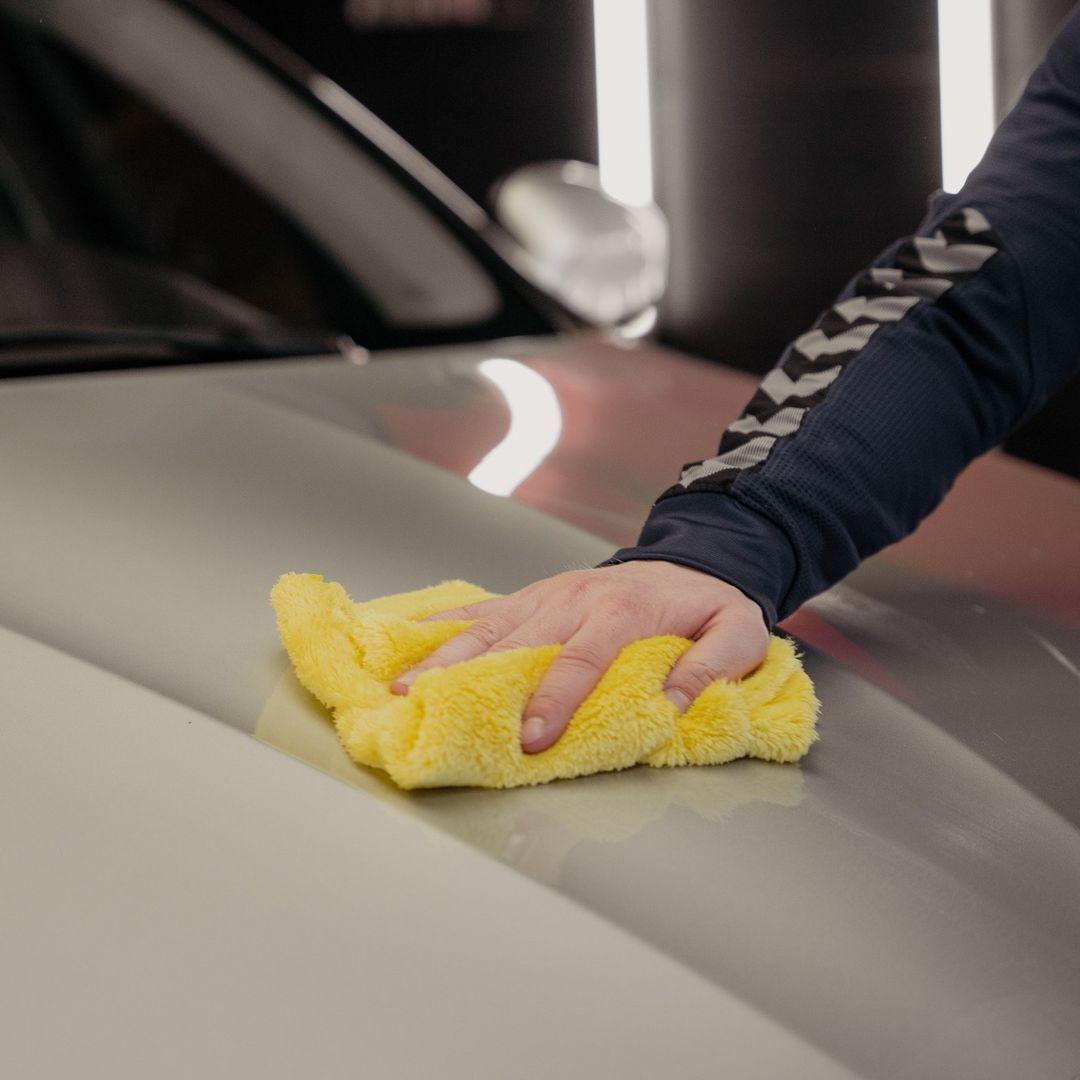
How Do You Keep Microfiber Towels Soft and Absorbent?
Keep microfiber separate from lint-producing household textiles and avoid fabric softener. Residues trapped in the fibers can reduce absorbency and affect how the towel behaves on paint or glass.
Separate towels by task before washing as well. Paint-finishing towels should not share contamination with wheel, engine-bay or heavy interior towels.
If a towel is no longer suitable for delicate paint, do not necessarily throw it away. Reassign it to a less sensitive task and reserve your cleanest microfiber for finishing work.
Microfiber Towel FAQ
What GSM microfiber towel is best for car detailing?
It depends on the job. Use 500–600 GSM for paint finishing and buffing, 320–350 GSM for interiors and everyday detailing, and a dedicated waffle weave towel for glass.
Is 500 GSM or 600 GSM microfiber better?
Neither is universally better. A 500 GSM towel gives a good balance of softness and control, while 600 GSM provides more plushness and cushioning for delicate final finishing.
What side of a microfiber towel should I use?
On dual-sided towels, use the fluffier side for more delicate wiping and final passes, and the shorter side when you need more controlled cleaning or product removal.
Which microfiber towel should I use for car glass?
Use a dedicated waffle weave microfiber such as ZEPHYR. Its structure is better suited to removing glass cleaner and moisture with less lint and streaking than a thick plush finishing towel.
Can one microfiber towel be used for the whole car?
It is better to separate towels by task. Paint, glass, interiors and dirtier areas expose the towel to different residues and contamination, so task-specific towels reduce cross-contamination.
Can I use a 600 GSM microfiber towel to dry the whole car?
You can absorb water with it, but a compact 600 GSM finishing towel is not the most efficient choice for full-body drying. A dedicated drying towel is designed for much greater water pickup and faster panel coverage.
One Towel Should Not Do Every Job.
Build your microfiber setup around the surface and task: plush towels for paint, balanced microfiber for interiors, waffle weave for glass and dedicated formats for workshop rotation.


