
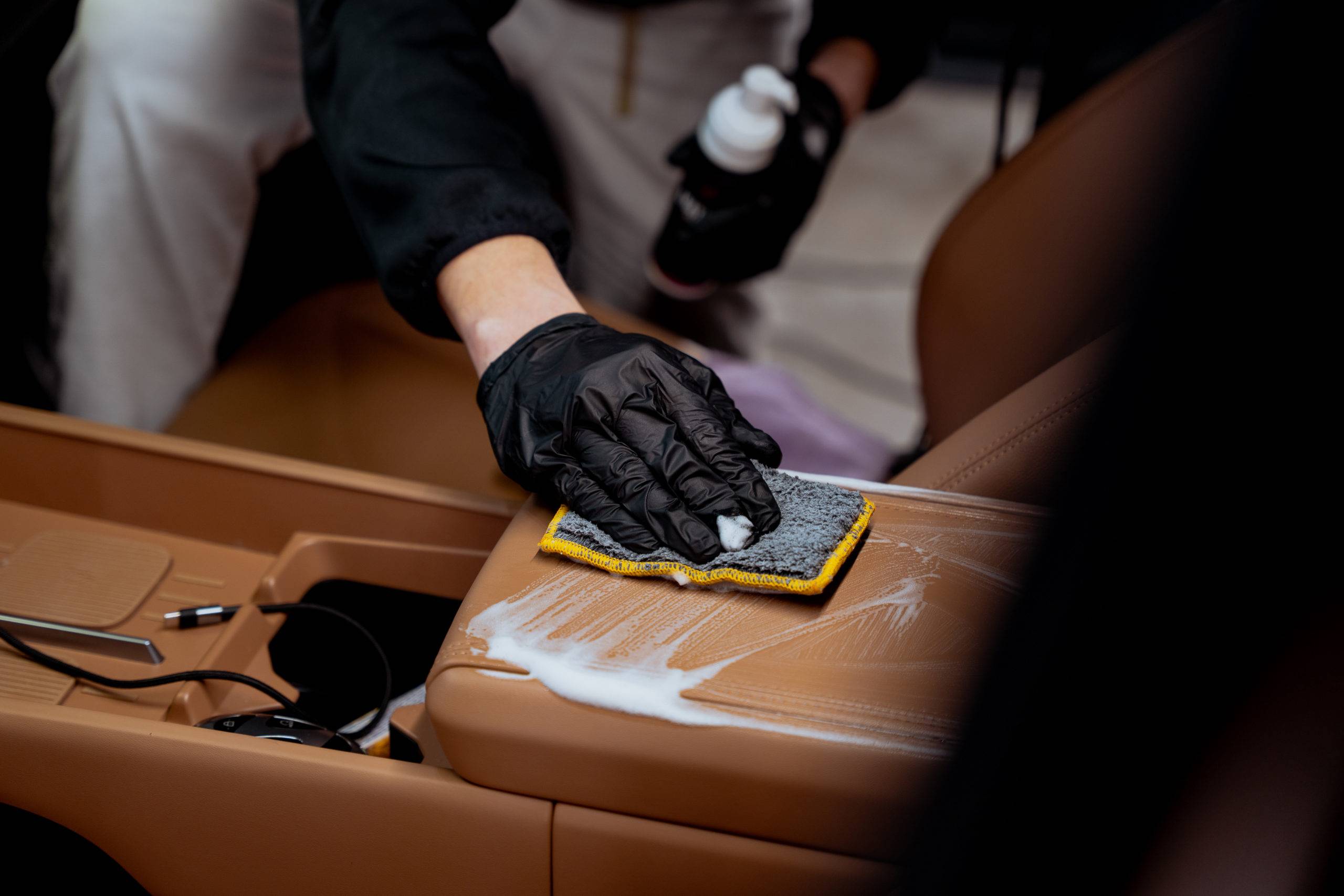
Use the right tool at every stage of leather cleaning.
Cleaning leather car seats safely is not about scrubbing harder. It is about controlling the cleaner, the brush, the pressure and the way loosened contamination is removed.
This guide focuses on the tools and technique behind the process: which brush to use, how much pressure to apply, which microfiber works for wiping and how to spread conditioner evenly.
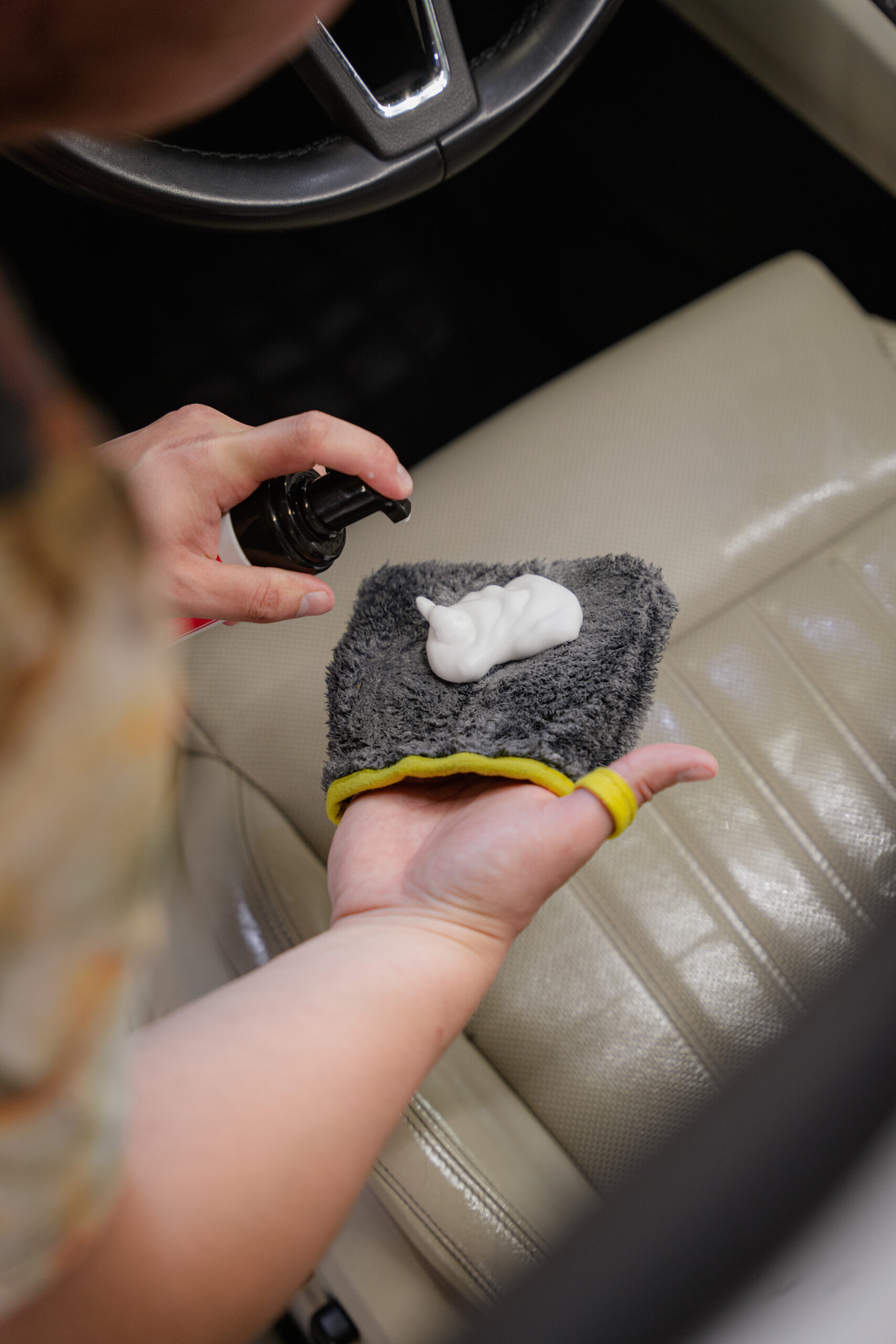
For modern coated leather, start by vacuuming the surface. Apply cleaner in a controlled way, agitate gently with a dedicated leather brush, remove loosened dirt with a clean microfiber towel and use a separate applicator when applying conditioner. Avoid stiff brushes, excessive pressure and powered drill brushes.
Four Tools. Four Different Jobs.
Instead of trying to make one accessory do everything, separate the process into controlled stages.
Why Does the Tool Matter When Cleaning Leather?
Leather seats have grain, stitching, perforations, edges and shaped bolsters. These areas do not respond well to uncontrolled scrubbing. The tool should help the cleaner reach the texture while allowing you to keep pressure and moisture under control.
A larger or stiffer brush is not automatically more effective. On sensitive interior materials, precision is often more useful than aggression.
Control the pressure
Let the bristle tips work through the leather grain. Do not flatten the brush against the seat.
Control the moisture
Work in small sections instead of flooding seams, perforations and stitching.
Control contamination
Remove released dirt before it dries back onto the surface.
Know What Type of Leather You Are Working On
This workflow is intended for the coated leather commonly used in modern vehicle interiors. Check the vehicle manufacturer’s instructions and test products on a hidden area before cleaning the complete seat.
Nubuck, suede, oiled leather and other specialist finishes need a different cleaning method.
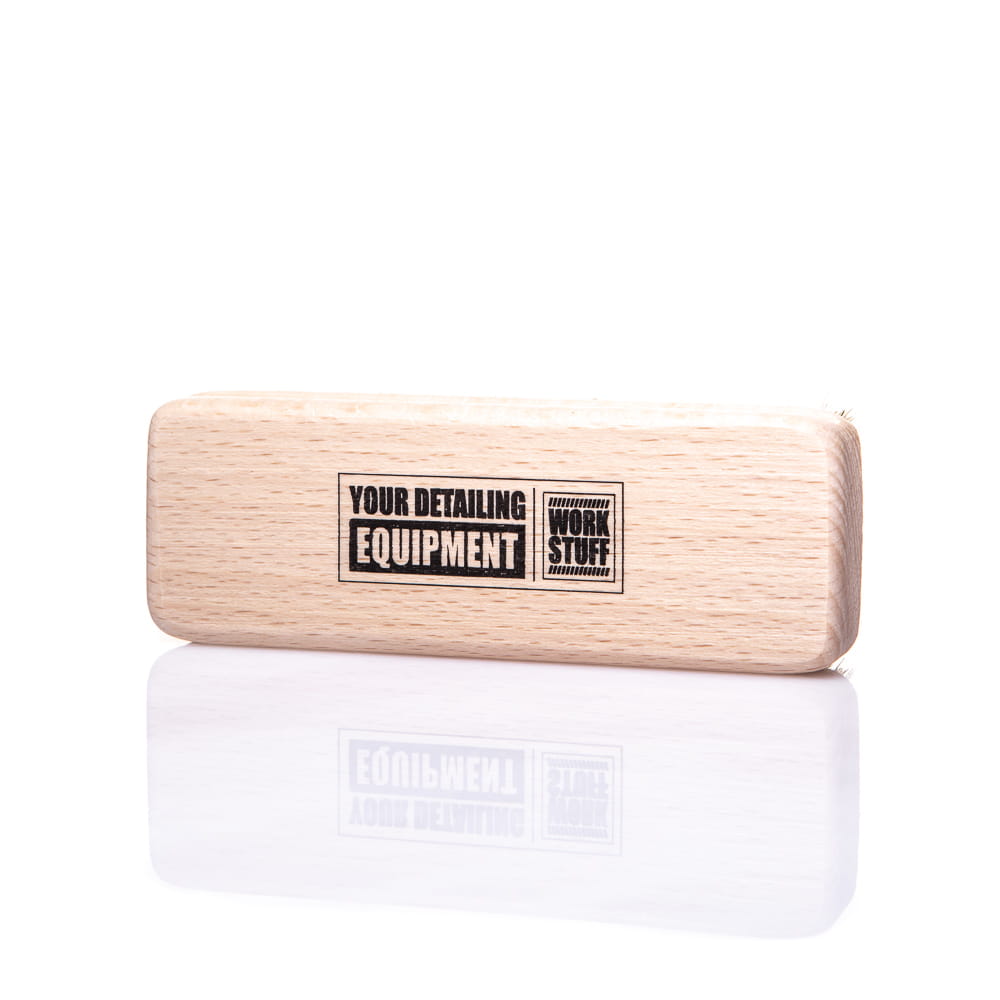
What Brush Should You Use to Clean Leather Car Seats?
Use a brush designed specifically for leather and delicate interior work, rather than a stiff exterior or wheel brush.
The WORK STUFF HANDY Leather Brush uses a compact lacquered beech-wood frame and a mixed natural/synthetic bristle construction for controlled leather cleaning.
Its compact format makes it easier to work around seat bolsters, stitching, steering wheels and smaller leather sections without applying unnecessary force.
How Much Pressure Should You Use?
LESS THAN YOU THINK.The cleaner and the movement of the bristle tips should do most of the work. More pressure does not automatically produce a cleaner surface.
Hold the brush securely but avoid pushing the bristles flat against the leather.
Use short, controlled movements through the leather grain.
Work one small section at a time and inspect the result before repeating the process.
Keep the brush clean so previously removed contamination is not worked back into the surface.
How Should You Clean Grain, Stitching and Perforated Leather?
Use the tips of the bristles
Move the brush through the texture instead of pressing the whole brush face into the seat.
Reduce pressure
Work along seams carefully and avoid repeatedly pulling across stitching with unnecessary force.
Use less moisture
Apply cleaner to the brush or microfiber rather than saturating perforated sections directly.
Work in smaller sections
Curved and high-contact areas are easier to control when cleaned progressively.
How to Clean Leather Car Seats Step by Step
Remove loose contamination
Remove sand, crumbs and loose particles from folds, seams and seat edges before introducing cleaner.
Check a hidden area
Confirm that the colour and surface finish remain stable before cleaning the complete seat.
Control the cleaner
Apply a suitable leather cleaner to your working tool instead of flooding the seat.
Use HANDY with light pressure
Work in short, controlled movements and allow the bristles to reach into the leather grain.
Lift the released contamination
Use a clean microfiber towel before cleaner residue and loosened dirt dry back onto the surface.
Check before repeating
Repeat only where contamination remains. Avoid automatically cleaning every section twice.
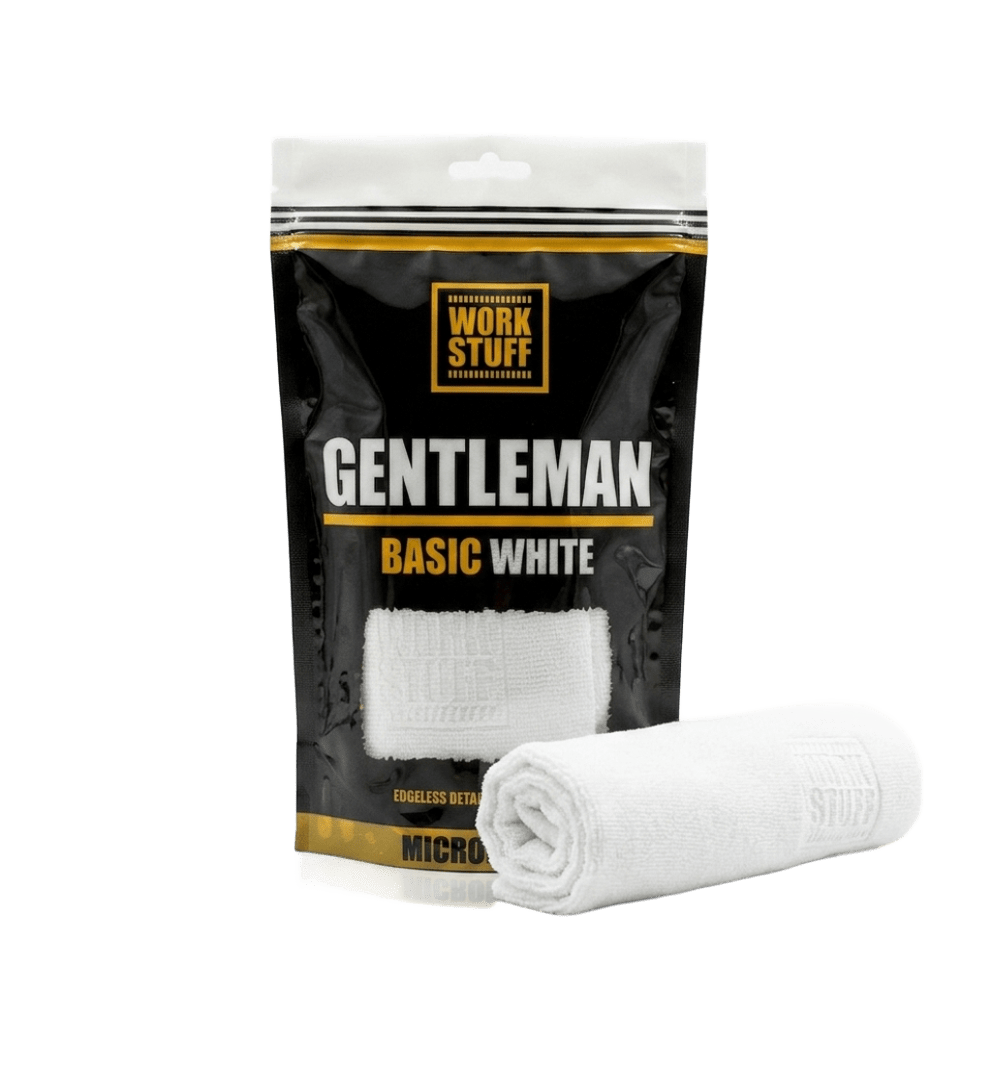
Which Microfiber Should You Use After Cleaning Leather?
Once the brush has released dirt from the surface, that contamination needs to be physically removed.
The WORK STUFF GENTLEMAN Basic is a 350 GSM, 40 × 40 cm microfiber suitable for controlled interior wiping.
Fold the towel into multiple clean working sides and rotate it as contamination builds up. Do not keep wiping the whole seat with one dirty section.
Choose Chemistry for the Surface — Then Let the Tools Do Their Job
This article focuses on WORK STUFF tools and technique. If you use GOOD STUFF chemistry, Leather Cleaner can provide the cleaning stage of the workflow. For a deeper breakdown of leather chemistry and maintenance products, use the dedicated GOOD STUFF leather-care content.
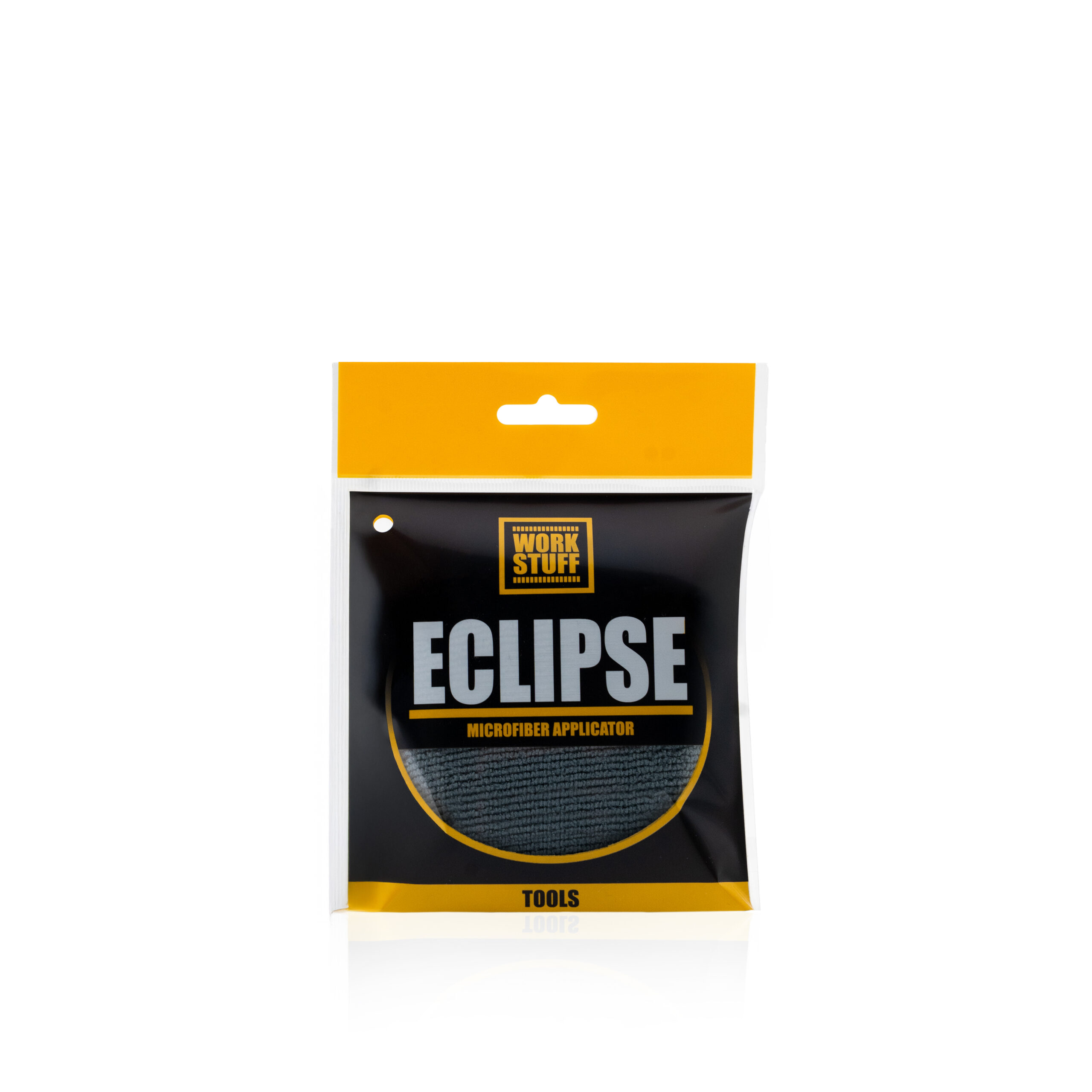
What Should You Use to Apply Leather Conditioner?
Conditioner is easier to control when it is applied with a dedicated applicator rather than poured directly onto the seat.
The WORK STUFF ECLIPSE Microfiber Applicator combines microfiber, an internal foam core and a finger pocket that helps keep pressure and product distribution under control.
Use a small amount and spread a thin layer. More conditioner does not automatically improve the result.
Which Tools Should You Avoid on Leather?
Tools designed for heavy exterior contamination are unnecessarily aggressive for leather seats.
Powered agitation is useful on suitable upholstery and carpets, not delicate leather seating surfaces.
A contaminated towel can simply move released dirt back across the leather.
Large tools make it harder to control pressure around bolsters, seams and narrow sections.
Controlled application makes it easier to keep moisture away from seams and perforations.
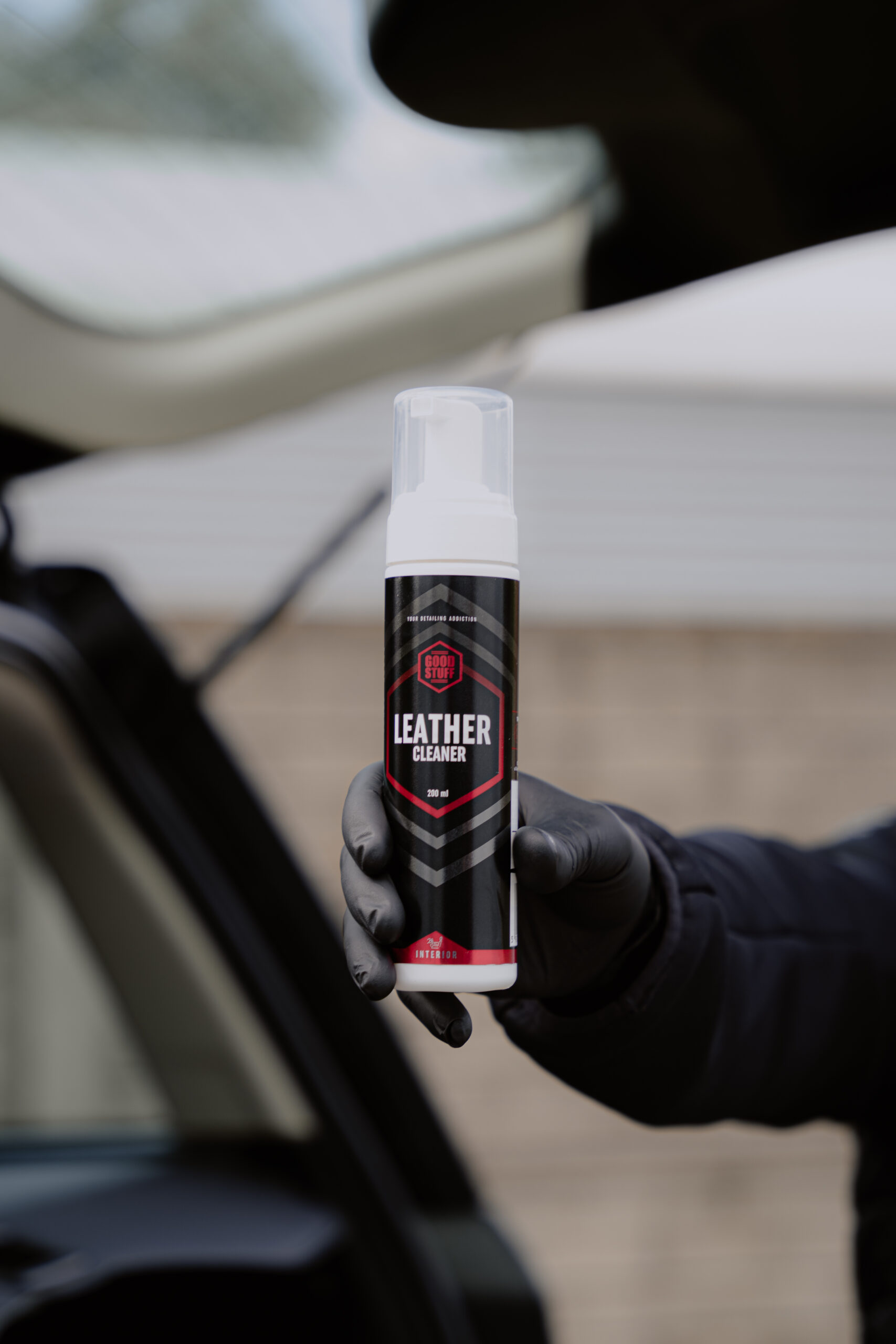
The cleaner supports the process. The tool and technique determine how controlled the work remains.
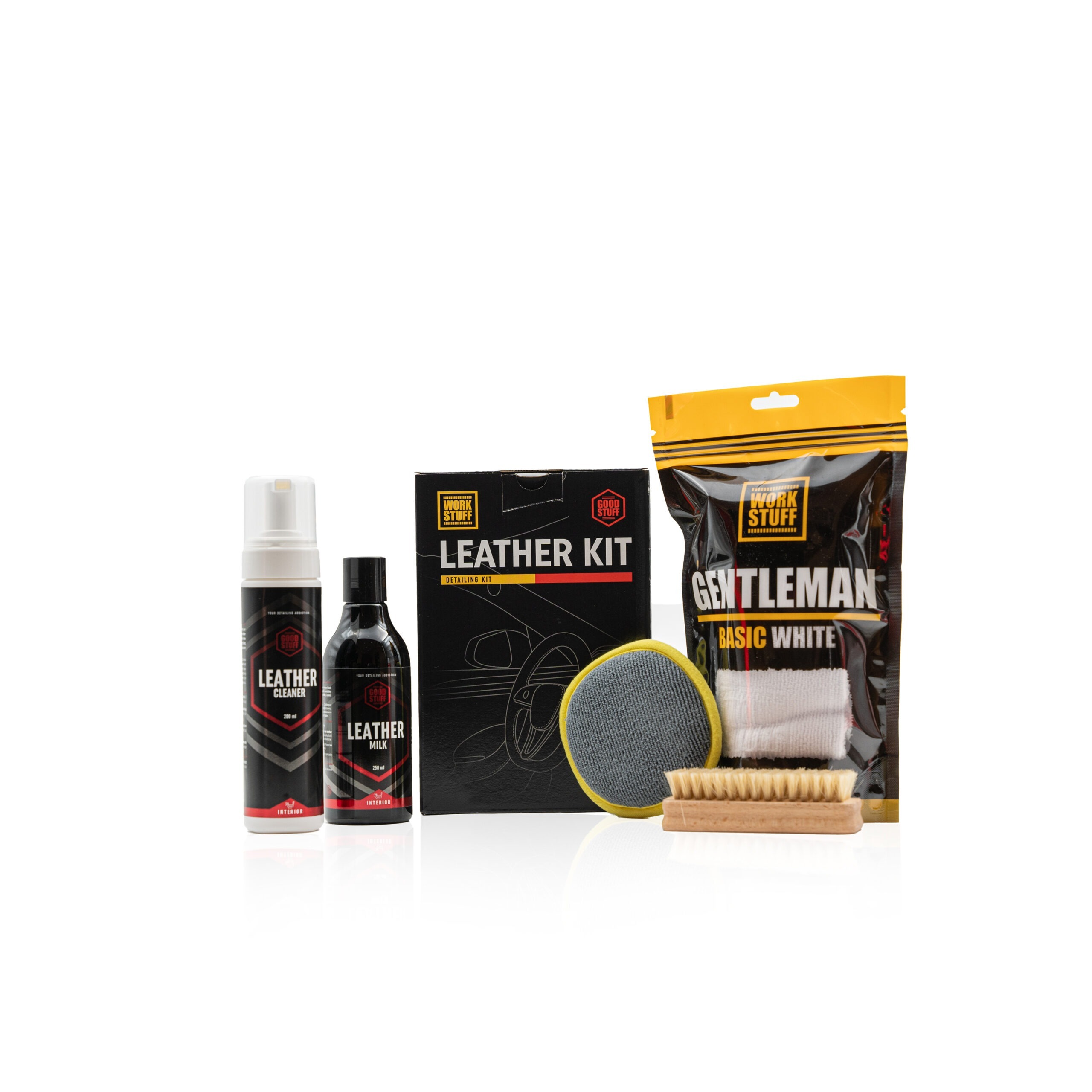 COMPLETE SETUP
Build the Complete Leather Tool Setup
The WORK STUFF Leather Kit combines the core tools and supporting chemistry needed for the full leather-care process.
The tools control the mechanical part of the process. The chemistry supports cleaning and conditioning.
Leather Cleaning Tools FAQ
What brush should I use to clean leather car seats?
Use a brush designed for delicate leather cleaning. A compact tool such as the WORK STUFF HANDY Leather Brush provides better control than a stiff exterior brush.
How hard should I brush leather seats?
Use light, controlled pressure. The bristle tips and cleaner should loosen contamination without the brush being heavily compressed into the leather.
Which microfiber towel should I use on leather?
Use a clean, soft microfiber suitable for interior work. GENTLEMAN Basic is a 350 GSM towel that can be folded into multiple clean working sides while removing residue.
Can I use a drill brush on leather car seats?
Powered drill brushes are better suited to appropriate fabric, carpet and textile surfaces. For leather seats, use a dedicated manual leather brush so pressure and movement remain under control.
What should I use to apply leather conditioner?
Use a clean applicator that allows a thin, even layer to be spread across the surface. The WORK STUFF ECLIPSE Microfiber Applicator provides a foam core and finger pocket for better control.
Should cleaner be sprayed directly onto leather seats?
Controlled application is generally preferable, especially around perforations and stitching. Applying cleaner to the working tool can make it easier to manage the amount of moisture used.
Better Leather Cleaning Starts with Better Tool Control.
Use HANDY for controlled agitation, GENTLEMAN Basic to remove released contamination and ECLIPSE for thin, even product application.


