
The coating is only as precise as the tool that applies it.
Knowing how to apply ceramic coating is not only about choosing the right formula. The applicator controls how evenly the product reaches the paint, how much coating is wasted and how easy the layer is to level before it cures.
Quick answer
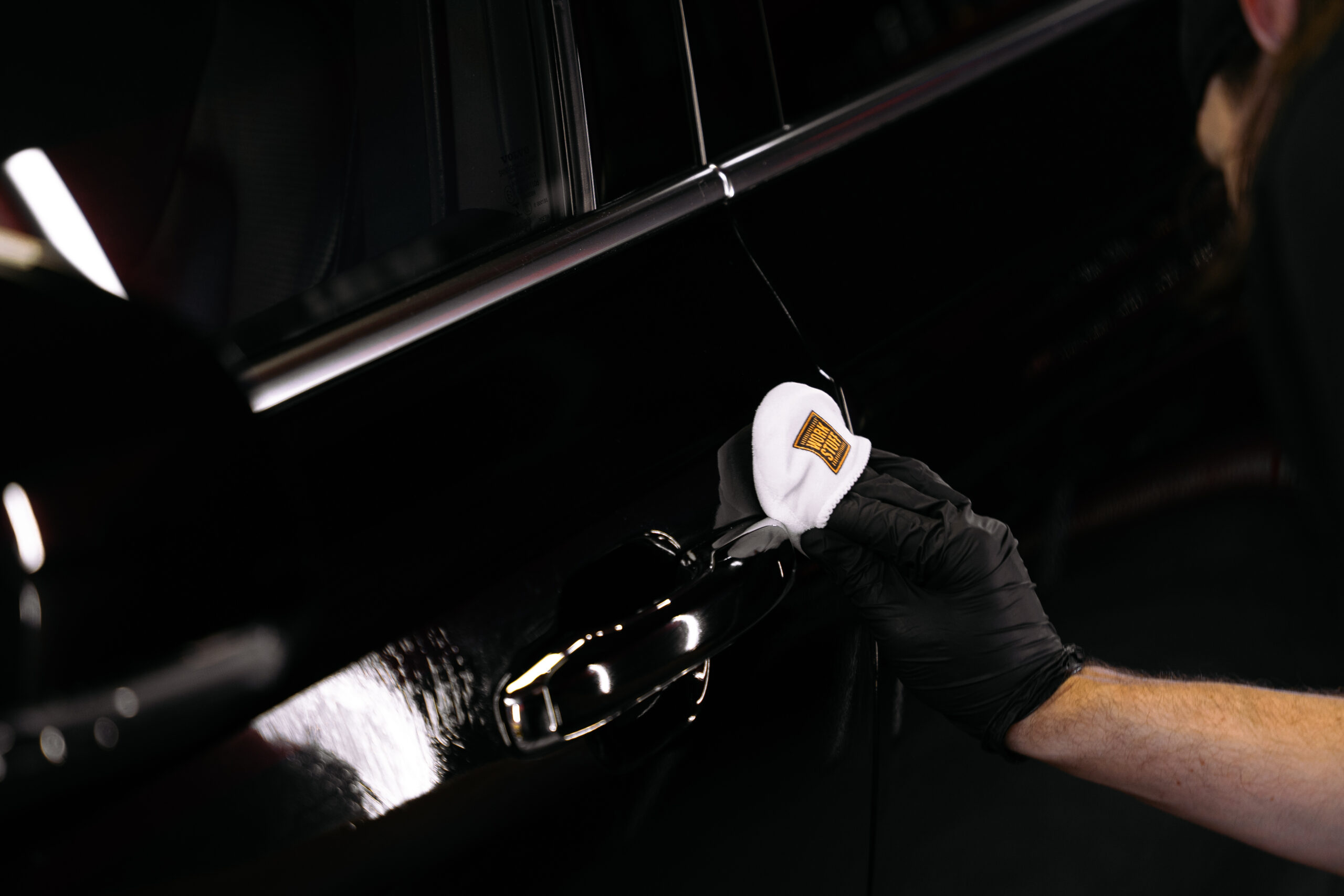
For a controlled ceramic coating application, use a clean, paint-safe microfiber coating applicator, work in small cross-hatch sections and replace the pad after the coating job. A consistent layer is easier to level and less likely to leave high spots.
Small tool. Major influence on the final result.
A professional coating can only perform as intended when it is applied to a correctly prepared surface in a thin, even layer. The applicator is the point where the coating, the paint and the detailer's technique meet.
More even coverage
A dense microfiber face helps distribute coating across the panel instead of creating isolated wet spots and dry gaps.
Better product control
Lower unnecessary absorption means more of the coating is transferred to the surface and less disappears inside the pad.
Safer panel-by-panel work
A stable grip and visible working face make it easier to control pressure, direction and possible contamination.
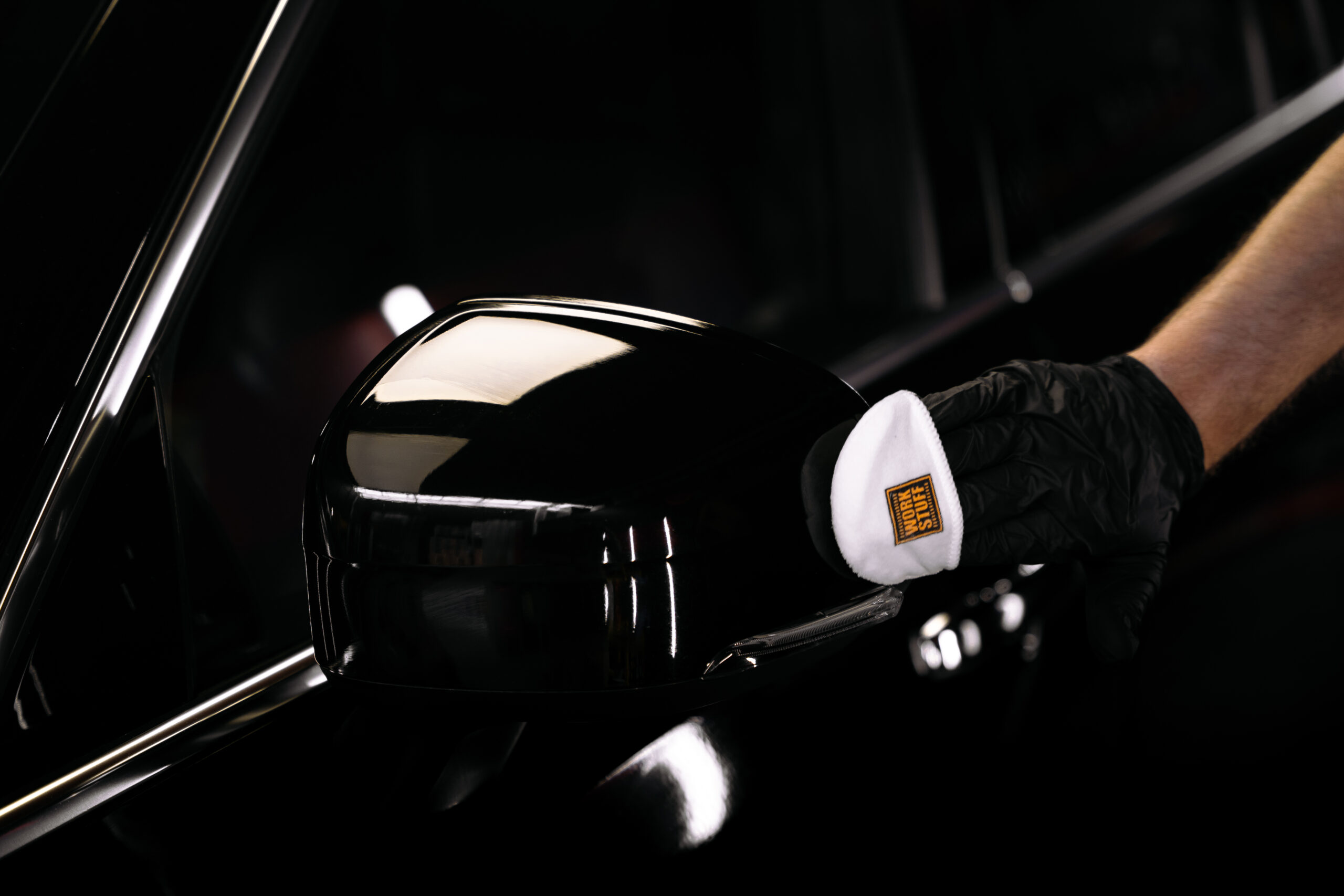
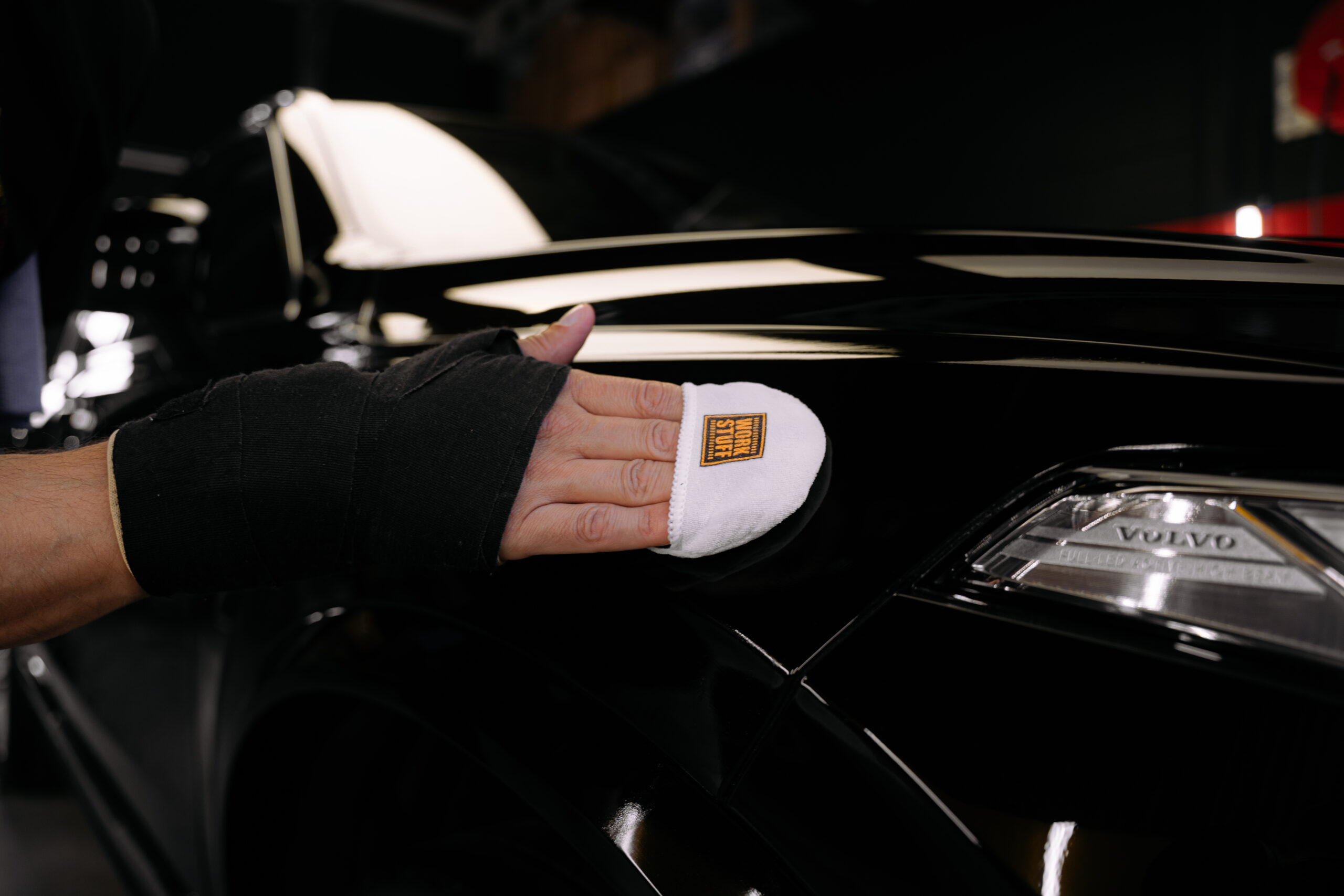
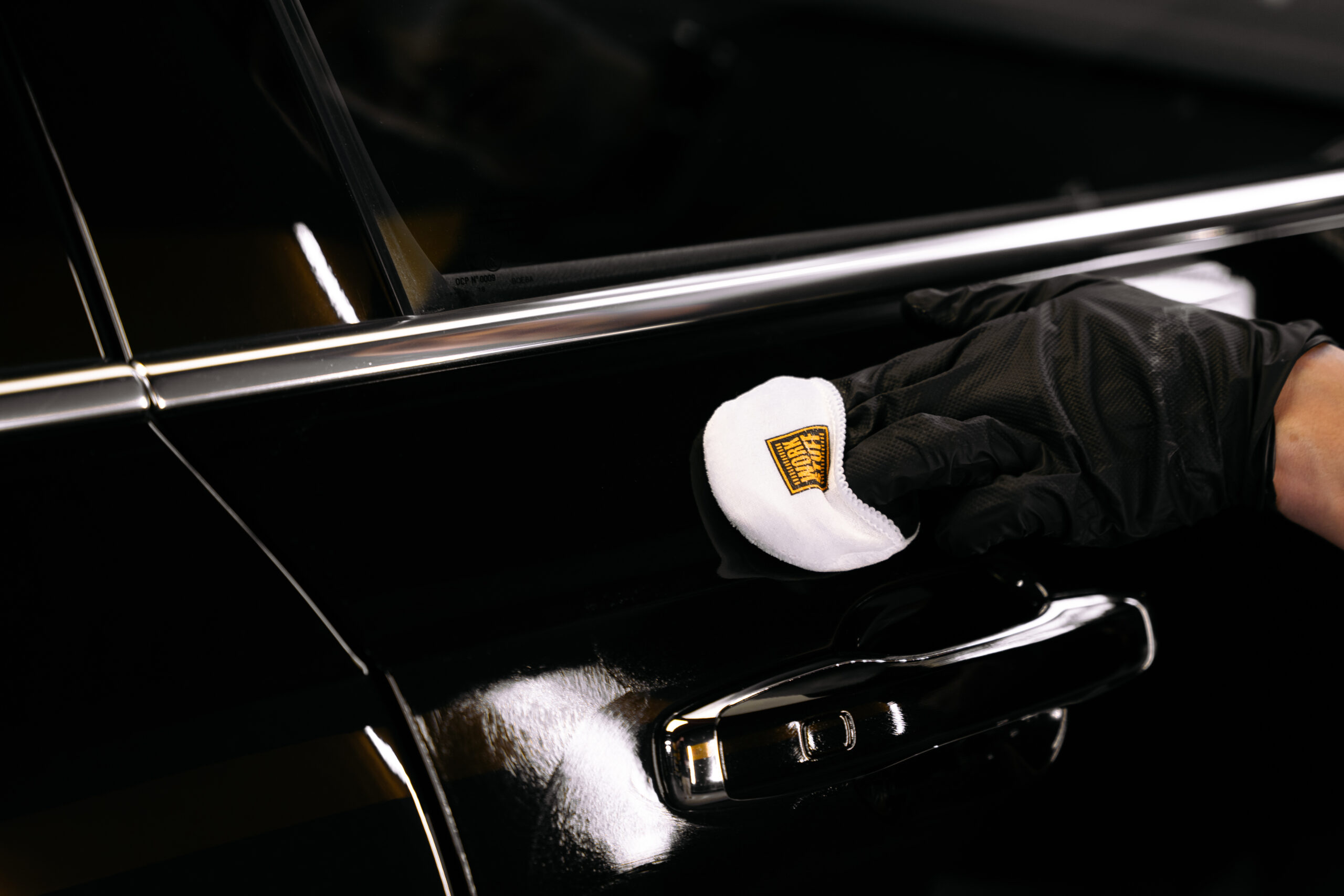
WORK STUFF Microfiber Ceramic Coating Applicator Pad
A single-use, lint-free microfiber applicator designed for ceramic, quartz and graphene coatings. Its 85 mm diameter, 12 mm thickness and dense 565 GSM surface provide a secure grip and controlled coverage without scratching delicate paint.
View the applicator
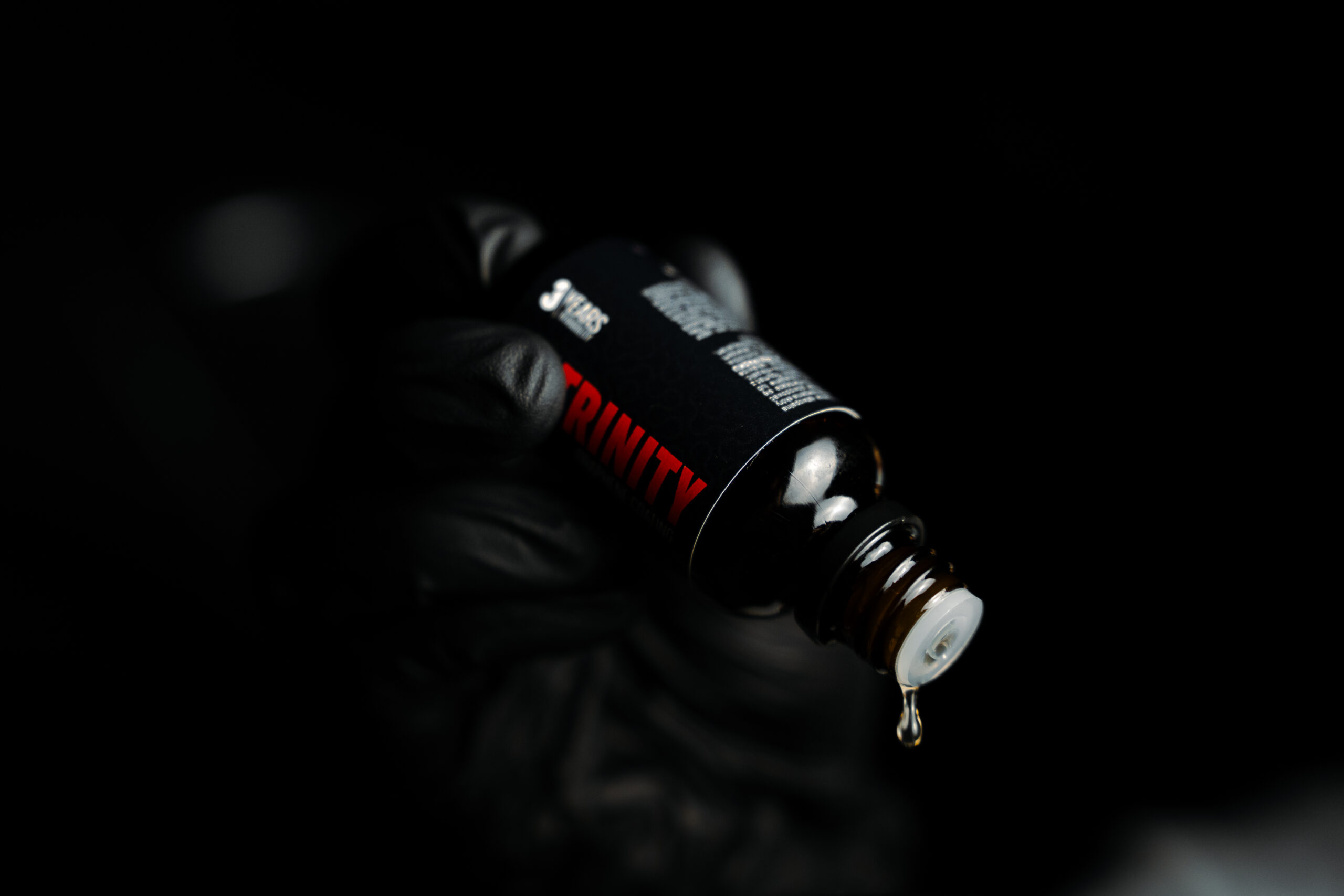
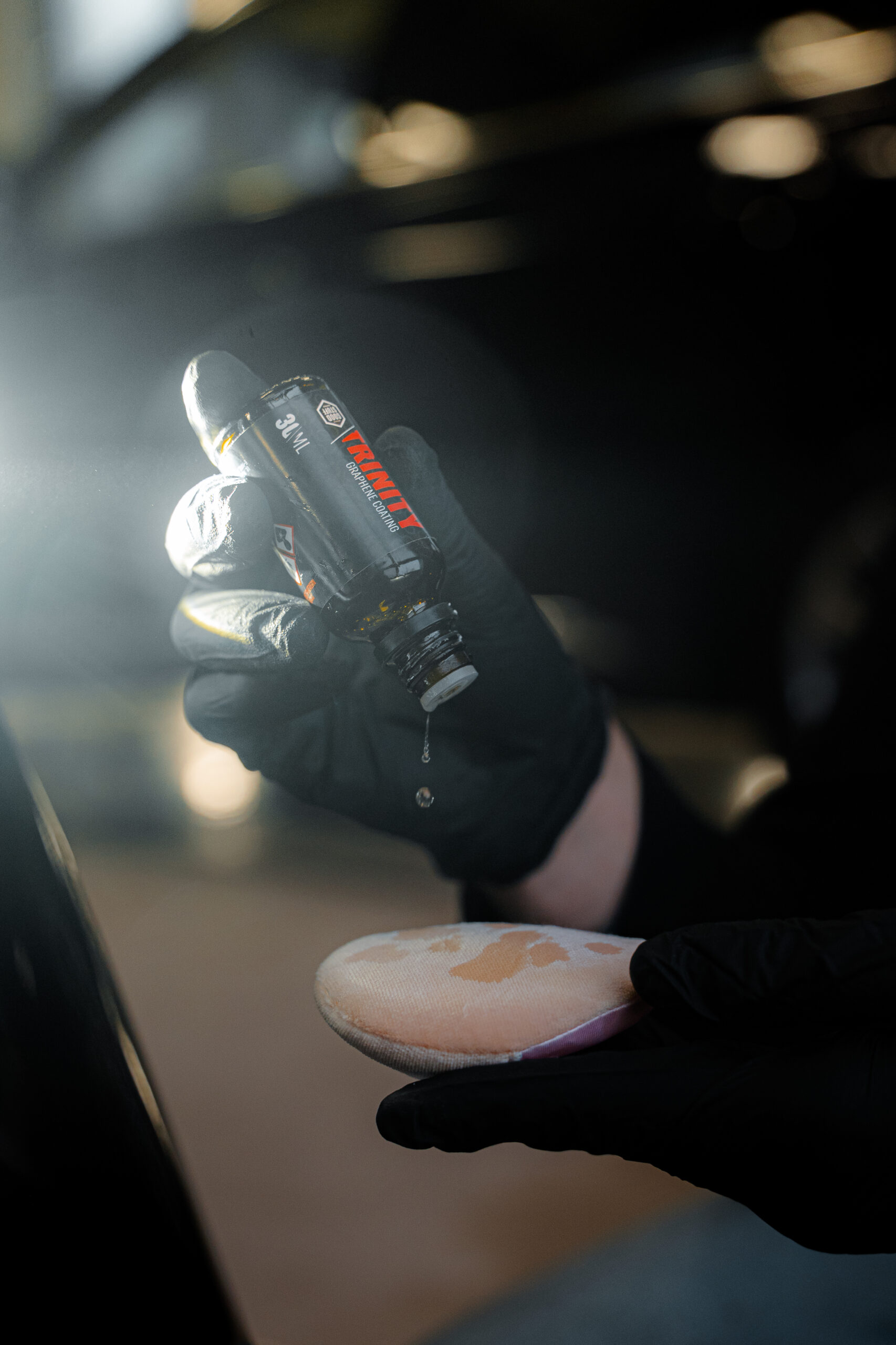
GOOD STUFF Trinity Graphene Coating
A professional graphene ceramic coating developed for deep gloss, strong hydrophobic behavior and protection lasting up to three years or 60,000 km when correctly applied and maintained.
Explore TrinityHow to apply ceramic coating to a car.
The following workflow uses Trinity Graphene Coating as the practical example, but the same fundamentals apply to many ceramic and graphene coating applications. Always follow the instructions supplied with the specific coating.
Wash and fully decontaminate the paint
Remove loose dirt, road film and embedded contamination before coating. Wash safely, use an iron remover when needed, complete mechanical paint decontamination and correct visible paint defects. A coating preserves the surface underneath; it does not hide swirls, oxidation or bonded contamination.
Degrease and prepare the working area
Use an IPA-based panel wipe to remove polishing oils and residues. The paint must be clean, dry and cool. Work indoors or in shade, with good lighting and enough time to inspect each section from several angles.
Prime the ceramic coating applicator pad
Shake Trinity well and apply approximately 8–10 drops to the clean microfiber applicator face. The first application primes the pad; later sections normally need fewer additional drops. The pad should be evenly damp, not soaked.
Apply in small cross-hatch sections
Work on an area of roughly 50 × 50 cm / 20 × 20 in. Move the applicator in overlapping horizontal passes, followed by vertical passes. Use light, consistent pressure and make sure the entire section receives a uniform film.
Watch the coating flash and level it on time
With Trinity, the leveling window is approximately 30–120 seconds and depends on temperature, humidity and airflow. When the wet film changes to a light satin or rainbow appearance, level it with one clean microfiber towel and finish with a second towel to remove remaining residue.
Inspect, cure and protect the fresh coating
Check the panel with focused lighting before moving on. Keep the vehicle dry for at least eight hours and do not wash it or apply maintenance products during the seven-day curing period. For a second Trinity layer, allow at least one hour after the first layer has been correctly leveled.

Microfiber applicator or foam applicator?
Both formats can apply a coating, but they do not always offer the same handling. For a professional graphene or ceramic coating, control and consistent transfer are more important than simply using the cheapest available sponge.
| Factor | Microfiber coating applicator | Basic foam applicator |
|---|---|---|
| Product distribution | Dense fibers help spread the coating across the working face and support even cross-hatch coverage. | Performance varies significantly with foam density, shape and surface finish. |
| Product absorption | Designed to reduce unnecessary absorption and transfer more product to the paint. | Some open-cell foams can hold more liquid inside the applicator. |
| Grip and control | Round ergonomic construction supports stable pressure and panel-by-panel movement. | Thin blocks may be harder to grip consistently during longer applications. |
| Contamination visibility | A light, visible working face makes particles and dirt easier to detect. | Dark foam can make small contamination harder to notice. |
| Best use | Controlled application of ceramic, quartz and graphene coatings. | Depends on the product; often suitable for waxes, dressings or less demanding applications. |
Six ceramic coating application mistakes.
Most visible application problems come from poor preparation, working too large an area or losing control of the flash and leveling stage—not from a lack of coating on the panel.
A thicker wet layer does not automatically create stronger protection. It usually increases residue, slows leveling and wastes coating.
The coating may begin curing before the whole area is leveled, increasing the risk of high spots and uneven residue.
Ceramic, quartz and graphene products crystallize inside the microfiber structure. A hardened pad can scratch paint and distribute product unevenly.
The first towel removes most residue; the second clean towel completes the final wipe and helps reveal remaining smears.
Warm, dry or strongly ventilated conditions can shorten the flash time. Adjust section size and inspect the film continuously.
High spots can be difficult to see in flat light. Inspect from several angles before the coating hardens.
A simple coating application checklist.
Prepare every item before opening the coating bottle. Once application begins, searching for a clean towel or better light wastes part of the working window. After the coating has fully cured, return to a gentle pH-neutral maintenance wash to preserve the finish.
- Clean, decontaminated and degreased paint
- Cool surface and controlled working conditions
- Fresh microfiber ceramic coating applicator pad
- At least two clean leveling towels per working area
- Focused inspection light
- Timer or clear panel-by-panel workflow
- Nitrile gloves and suitable ventilation
- Dry indoor curing space
Ceramic coating applicator FAQ.
These are the practical questions that usually appear before a first ceramic or graphene coating application.
What is the best applicator for ceramic coating?
Can the same pad apply ceramic, quartz and graphene coatings?
How much ceramic coating should be placed on the applicator?
Can a ceramic coating applicator pad be reused?
How large should each coating section be?
What causes high spots after ceramic coating application?
Apply the coating with control—not guesswork.
Trinity provides the protective chemistry. The WORK STUFF Microfiber Ceramic Coating Applicator Pad helps transfer it to the surface in a thin, consistent layer. Together, they create a more predictable workflow from the first drop to the final inspection.
Read more about Trinity graphene coating technology →


