

Which microfiber towel should you use?
The best microfiber towel for your car depends on what you are cleaning. Plush high-GSM towels work well on delicate paint, waffle weaves are better suited to glass, and lighter microfiber is easier to control on interiors and dirtier areas.
GSM is important, but it is only one part of the decision. Fiber blend, pile length, weave and contamination level all influence how a microfiber cloth performs.
Choose the towel according to the surface first, then look at density, weave and fiber blend.

One towel does not do everything.
A microfiber that feels perfect on paint may be inefficient on glass. A towel that works well inside the car may not provide enough cushioning for final polishing or wax removal.
Building a simple microfiber system around specific tasks is more useful than searching for one universal towel.
What does GSM mean in microfiber towels?
GSM means grams per square meter. It describes the weight and density of the fabric. In simple terms, a higher GSM towel usually contains more microfiber material and feels thicker or more plush.
That does not mean the highest GSM is always the best choice. Different detailing jobs require different structures.
A plush towel in this range gives more cushioning when removing wax, Quick Detailer, sealants or polishing residue from paint.
| GSM range | Typical use | Why it works | Example |
|---|---|---|---|
| 220–300 | Dirty areas, interior, workshop use | Light, easy to control and quick to rotate | Roll Microfiber |
| 300–400 | Interior and general detailing | Balanced absorbency and control | Worker / Gentleman Basic |
| 400+ | Specialized applications | Depends strongly on weave and pile | Zephyr Waffle |
| 500–600 | Paint, wax removal and finishing | More cushioning for delicate surfaces | Gentleman / Gentleman+ |
Is a higher GSM microfiber always better?
No. A 600 GSM microfiber towel can be excellent for delicate paint and final buffing, but that same thickness may make it less practical for glass or tight interior areas.
The correct microfiber is the one that matches the task. Density should support the job rather than determine it.
Best microfiber towel for each detailing job.
Instead of asking which microfiber towel is best overall, choose according to the surface you are working on.
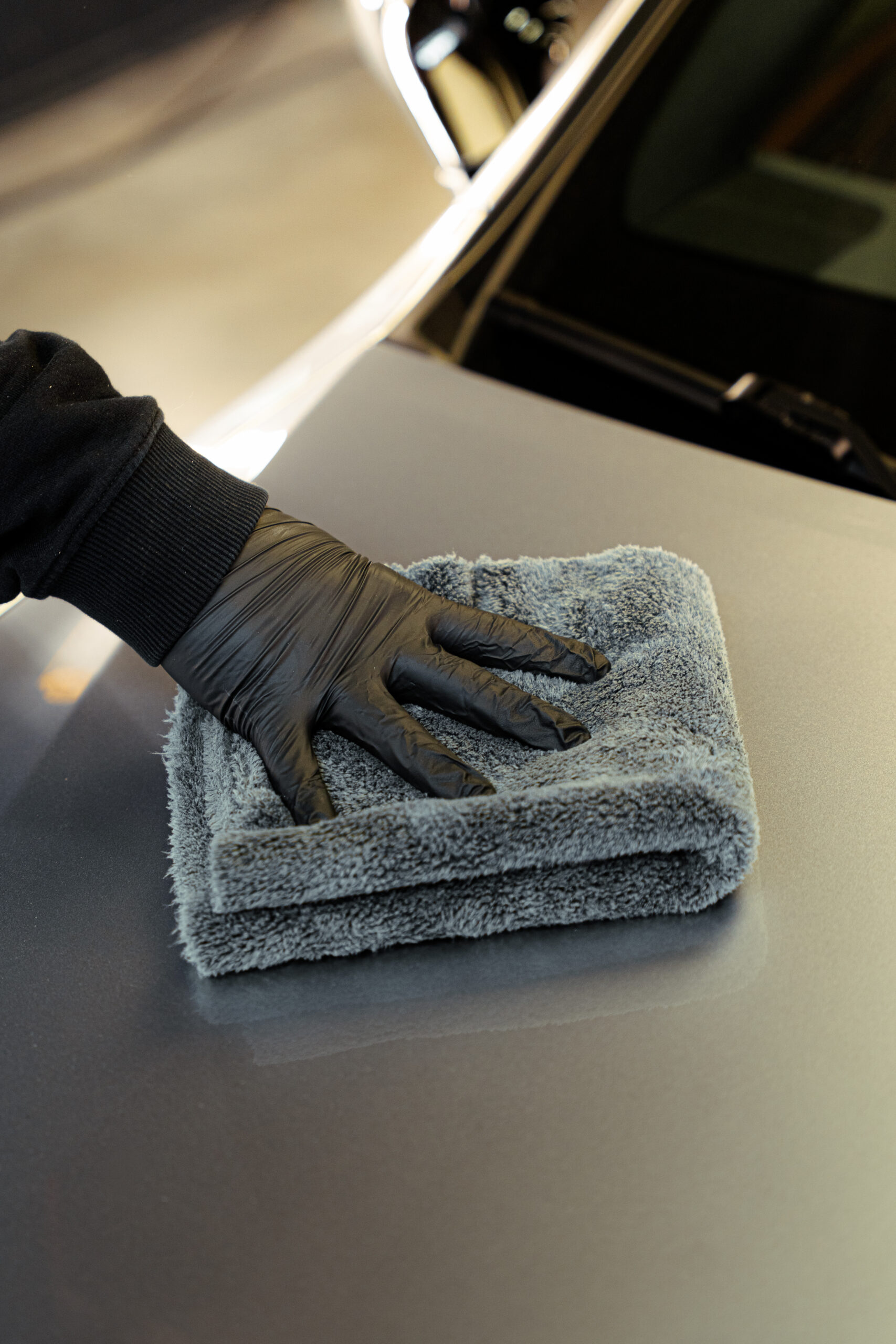
Paint & final buffing
For delicate clear coat, wax removal and final buffing, a plush 500–600 GSM microfiber provides extra cushioning and reduces direct pressure against the paint.
Example: WORK STUFF Gentleman or Gentleman+.

Glass & windows
Glass benefits from a low-lint structure rather than an extremely plush pile. A waffle weave helps pick up cleaner residue and moisture while reducing streaks.
Example: WORK STUFF Zephyr Waffle.
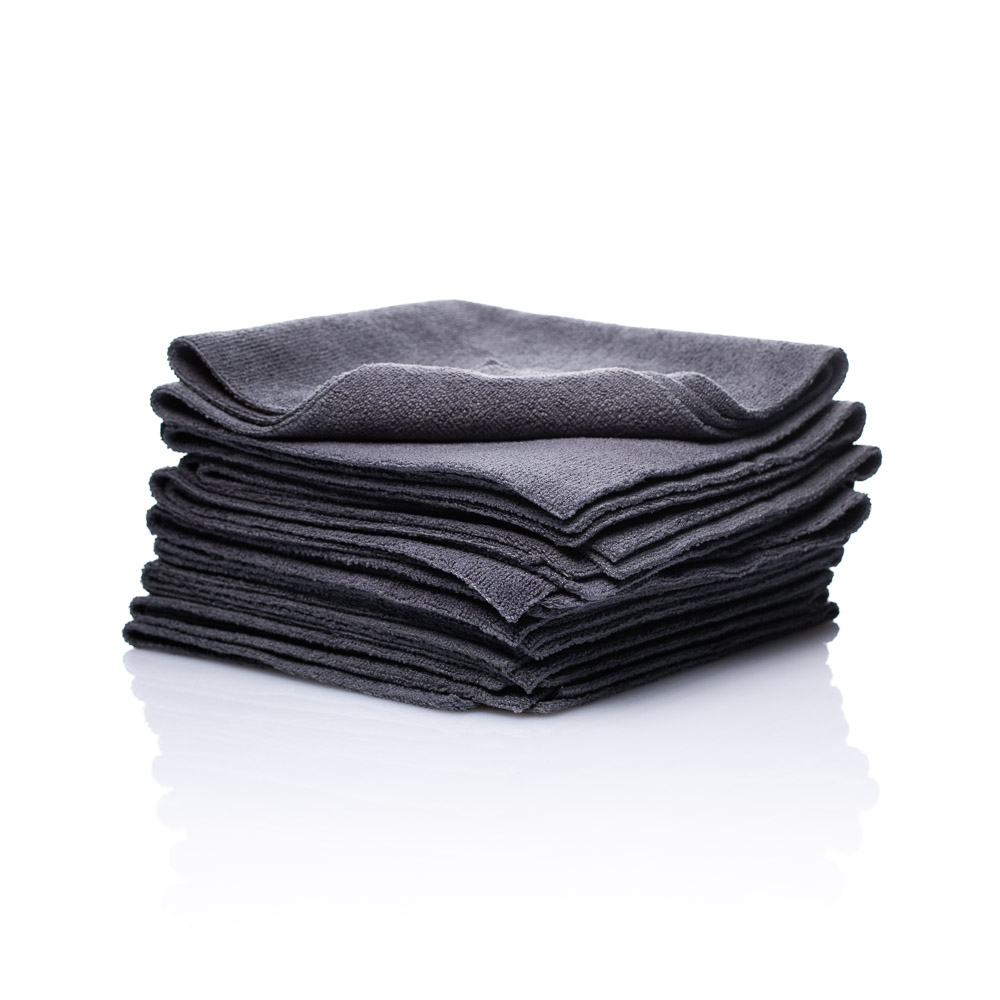
Interior cleaning
Interior plastics, dashboards and trim usually do not need extremely high GSM. A medium-density microfiber is easier to fold, control and rotate during cleaning.
Example: WORK STUFF Worker.

Dirty & utility areas
Door jambs, engine-bay areas, wheels and other contaminated zones should use separate microfiber towels. These tasks benefit from lighter cloths that can be rotated frequently.
Example: WORK STUFF Roll Microfiber.
Microfiber weave matters too.
Two towels with similar GSM can behave completely differently because of their weave and pile structure.
Soft, deep fibers create cushioning and are well suited to paintwork, wax removal and final finishing.
Provides more direct control and works well for interiors, product removal and general-purpose detailing.
Designed to collect moisture and residue efficiently, making it particularly useful for glass.
70/30 vs 80/20 microfiber.
GSM describes fabric density, but the polyester/polyamide ratio also affects softness, absorbency and how the towel behaves against the surface.
Because this is a separate search topic, we cover the full comparison in a dedicated guide.
Read the 70/30 microfiber guide →How to use a microfiber cloth on your car.
Even the best microfiber towel can cause problems if it is used incorrectly. A few simple habits make a major difference.
Fold it into quarters
This gives you multiple clean working faces and improves control while wiping.
Use light pressure
Let the microfiber and detailing product do the work rather than pressing hard against the surface.
Rotate frequently
When one side becomes saturated or dirty, switch to a fresh section instead of continuing to wipe.
Separate by task
Do not use the same microfiber on wheels, paint, glass and interior surfaces.

Separate microfiber by task.
A towel that has been used on wheels or dirty lower panels should not return to delicate paintwork.
Color coding or storing towels in separate groups is one of the simplest ways to reduce accidental contamination.
Can microfiber towels scratch car paint?
A clean, appropriate microfiber towel is designed to be safe for automotive surfaces. Problems usually occur because grit becomes trapped in the towel, too much pressure is used or the same cloth is moved between dirty and delicate areas.
Trapped grit is more dangerous than the microfiber itself.
A towel used on wheels should never return to paint.
Heavy wiping increases friction unnecessarily.
Residue, softener and contamination can reduce performance.
How many microfiber towels do you actually need?
For a normal maintenance detail, having several towels separated by task is usually more useful than relying on one expensive microfiber for the entire vehicle.
A practical setup can include dedicated towels for paint, interior, glass and dirtier areas, plus spare clean towels ready when the first ones become saturated.
How to wash microfiber towels.
Correct washing helps preserve softness, absorbency and paint safety. Avoid treating detailing microfiber like normal household laundry.
Full microfiber washing guideA simple WORK STUFF microfiber setup.
You do not need every towel for every job. A small selection covering different surfaces is enough for most detailing work.
Related microfiber guides.
Microfiber towels for cars.
Which GSM microfiber cloth is best for car paint?
A plush microfiber in the 500–600 GSM range is a good choice for delicate paint, wax removal and final buffing because it provides additional cushioning.
Is 600 GSM better than 300 GSM?
Not necessarily. 600 GSM is useful for soft paintwork and finishing, while a 300 GSM towel can be more practical for interiors and general cleaning.
What microfiber towel is best for car windows?
A low-lint or waffle-weave microfiber is usually better for glass because it removes moisture and cleaner residue without leaving a heavy pile behind.
Can microfiber towels scratch car paint?
Clean microfiber is designed to be paint-safe. Scratching is more commonly caused by trapped contamination, excessive pressure or using a towel from a dirty area on paint.
How often should I change microfiber towels while detailing?
Change or rotate the towel whenever the working surface becomes visibly dirty, saturated or loaded with product.
Can I wash car microfiber towels with normal laundry?
It is better to wash them separately from cotton and other lint-producing fabrics and to avoid fabric softener.
Build the right microfiber setup for every surface.
From plush paintwork towels to glass, interior and everyday detailing microfiber, choose the right tool for each part of the car.
